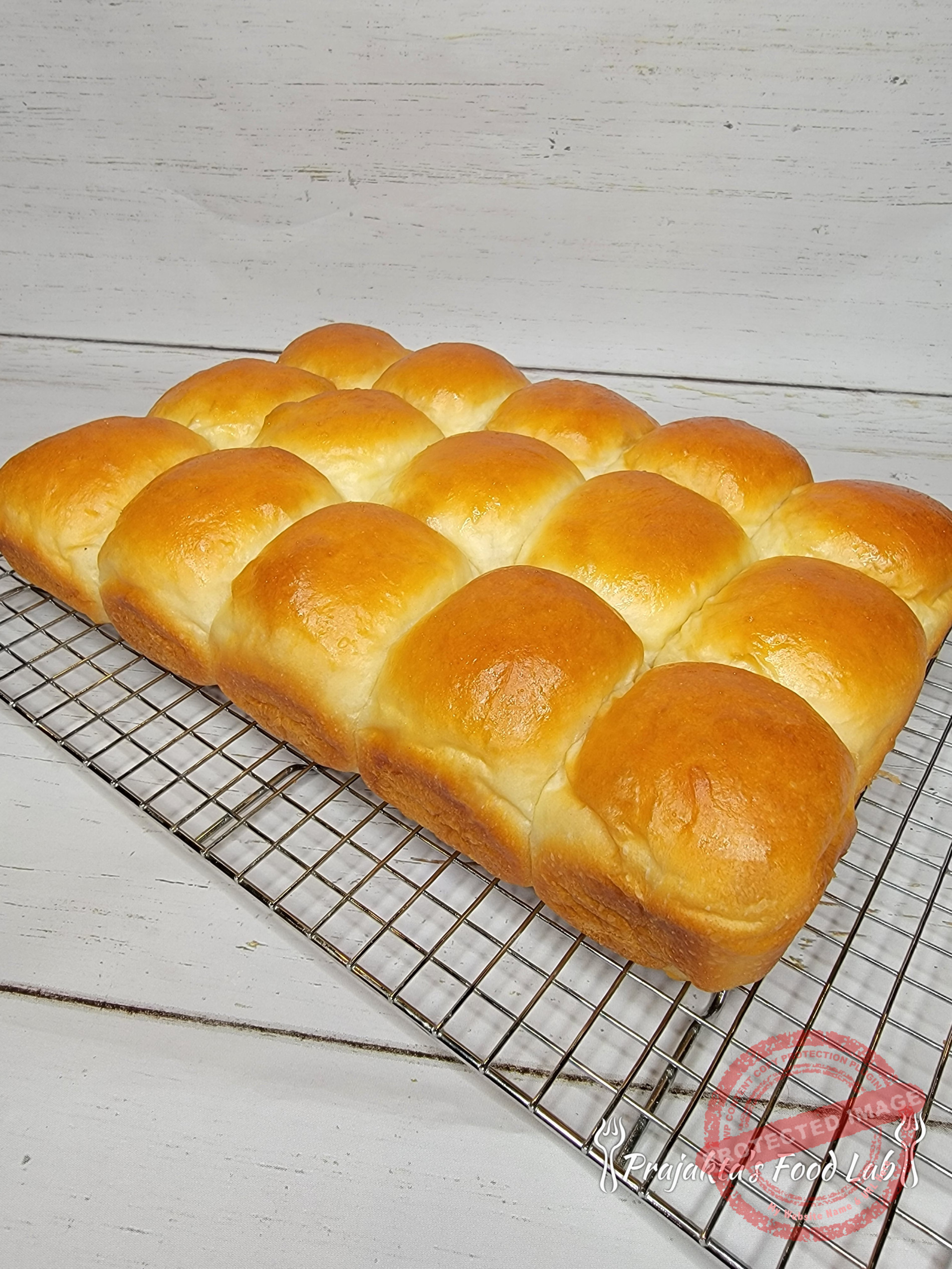
Ladi Pav/ Eggless Dinner Rolls/Ladi Pao/Ladi Pav Recipe
Ladi pav are those soft fluffy and delicious bread that you can eat with just about anything. Follow the step by step recipe to make the perfect ladi pavs
Equipment
- Oven
- Stand mixer (optional)
- Spatula
- Bench scraper/ Knife/ Surface scraper
- Big bowl
- Small bowl
- Measuring spoons
- measuring cups
- Damp kitchen towel/ Cling wrap / Air tight lid
- Hook attachment (for standmixer)
- 9x13 baking pan
Ingredients
- 4 cups All-purpose flour/ Bread flour Sifted
- 1 teaspoon Sugar
- 3 tablespoon Unsalted butter room temperature
- 1.5 teaspoon Salt
- 2.5 teaspoon Active dry yeast Preferable
- 1 tablespoon Oil for greasing
- 1 & ⅔ cups Lukewarm milk
Instructions
Activate the Yeast
- Take a small bowl with a ⅓ cup of lukewarm milk. Add 2.5 teaspoon of active dry yeast and 1tsp sugar, stir it in.
- Let it rest in a warm place to ferment or activate for about 15 minutes.
- The activated yeast will be frothy/ foamy
Making the Dough
- Take a big bowl or a stand mixer bowl and sift in the bread flour/ all-purpose flour and salt.
- Add the activated yeast mix and the remaining lukewarm milk.
- Mix everything together using a spatula. (follow this step even if you are using stand mixer)
- Once everything is roughly mixed, dust the work surface with little flour and get the sticky dough onto the dusted surface.
- Start kneading the dough and keep kneading for about 5 minutes. Keep scraping the surface for sticky dough using the bench scraper or something similar to get the dough together.
- Now add the 2 tablespoons butter and keep kneading for another 10 minutes using the stretch and fold method. This method helps develop the gluten in the dough much faster. In the stretch and fold method you push the dough away with the bottom of your wrist and then fold the stretched dough back onto the center.
- If the dough is too sticky even after adding butter add a tablespoon of flour if required. Dont be tempted to add too much flour, that will make the dough dry and you will get dense and dry ladi pav.
- If the dough still feels sticky add a teaspoon of oil or butter instead of flour. That will help in reducing the stickiness and at the same time maintain the hydration of the pav.
- However, if your dough is dry add a teaspoon of milk at a time to make it soft and pliable.
- After 15 minutes of kneading the dough would have come together making a tacky, soft and pliable dough.
- Once the dough is ready check the readiness by poking a finger into it. If the dough bounces back it is ready for the next step.
Stand mixer instructions
- If you are making the dough using stand mixer then after sifting the dry ingredients add the activated yeast and remaining lukewarm milk and mix the dough once with spatula.
- The attach the hook attachment and set the machine on 2 level and let it knead for 5 minutes. Then add 2 tablespoons of butter and let it knead for another 10 minutes.
- Once the dough is ready everything will come together and stick to hook with some dough stuck to the bottom acting as an anchor.
- Get this dough on a flour-dusted work surface and knead for another 3 to 5 minutes.
Proofing of the dough
- Grease a big bowl with oil or oil spray.
- Tuck the dough edges towards the center to form a nice ball with a nice rounded stretched surface on top.
- Transfer to dough to the greased bowl and lightly coat it with oil. Cover the bowl with a damp kitchen towel or a cling wrap and keep it aside at a warm place to ferment for about 1.5 hours.
Prepping the dough for final proofing
- After the dough is proofed and doubled up or well risen, deflate it by punching it. Take all the air out of the dough
- Dust the work surface with little flour and transfer the dough to the work surface. Knead the dough for 3 to 5 minutes and then either make a log or roll it a little flat using a rolling pin.
- Cut the dough into equal parts using the bench scraper or a knife. If you have a weighing scale weigh each ball to be about 60-64 grams.
- However, if you don't have a weighing scale you can just eyeball it to be of the same size.
- Working with one dough ball at a time, start tucking the edges of the dough towards the center. Keep repeating this process till you get a nice round ball with stretched firm skin.
- Now turn the ball over and using both your hands with your palm facing upwards start tucking in the dough ball. Using slight pressure push the dough downwards, inwards, and rotate your palms clockwise. This will tighten the dough and seal the edges. Once you have a nice round smooth surface ball transfer it to the greased baking 9x13 pan.
- Keep 1 finger space between each ball so that it has room to expand and touch each other during the second proofing.
Proofing the dough one final time
- Once you have placed all the balls in the tray cover it with a lid or damp kitchen towel or damp cheese cloth.
- Let it rest/proof for another 40 to 45 minutes or until they have doubled and touching each other.
Baking the Ladi Pav
- Pre-heat the oven at 400F or 205C and let it maintain the required temperature for at least 10 minutes before you start baking.
- Once the pavs are proofed brush it with a well-whisked egg or milk. Do it very lightly without breaking or damaging the top smooth texture.
- Place the tray in the oven for baking for about 15 - 17 minutes or until the internal temperature reaches 200F or 93C. I take mine out at 16 minutes. But each oven has a different heat setting so keep checking after 15 minutes.
- Get the tray out of the oven and brush the top with some butter. Let it rest for about 5 minutes before transferring it to the wire rack. This will help aerate the pav and prevent it from being soggy due to condensation.
- Let it rest for another 5 to 10 minutes and then enjoy the warm bread slathered with butter. Believe me, nothing can beat the warm bread with a generous amount of butter. My family totally loves it.
- Enjoy these soft delicious pav with any curry or an accompaniment of your choice.
Notes
- Always check the freshness of the yeast.
- You can replace milk with water, just remember to add 1,5 teaspoon of butter for every cup of water.
- Store the Ladi pav in an air-tight container and they can stay good outside for 2 to 3 days and for about a week in the refrigerator.
- Always use lukewarm milk. Cold milk will not activate the yeast and too hot milk will kill it.
- Avoid adding extra flour as you might get dense pav.
- I would recommend using a baking pan with a tall lid as that will prevent the surface of the poofed pav from getting damaged.
- Always use whole milk for the best result.
Tried this recipe?Let us know how it was!