

Some of the links below are affiliate links. This means that, at zero cost to you, I will earn an affiliate commission if you click through the link and finalize a purchase.
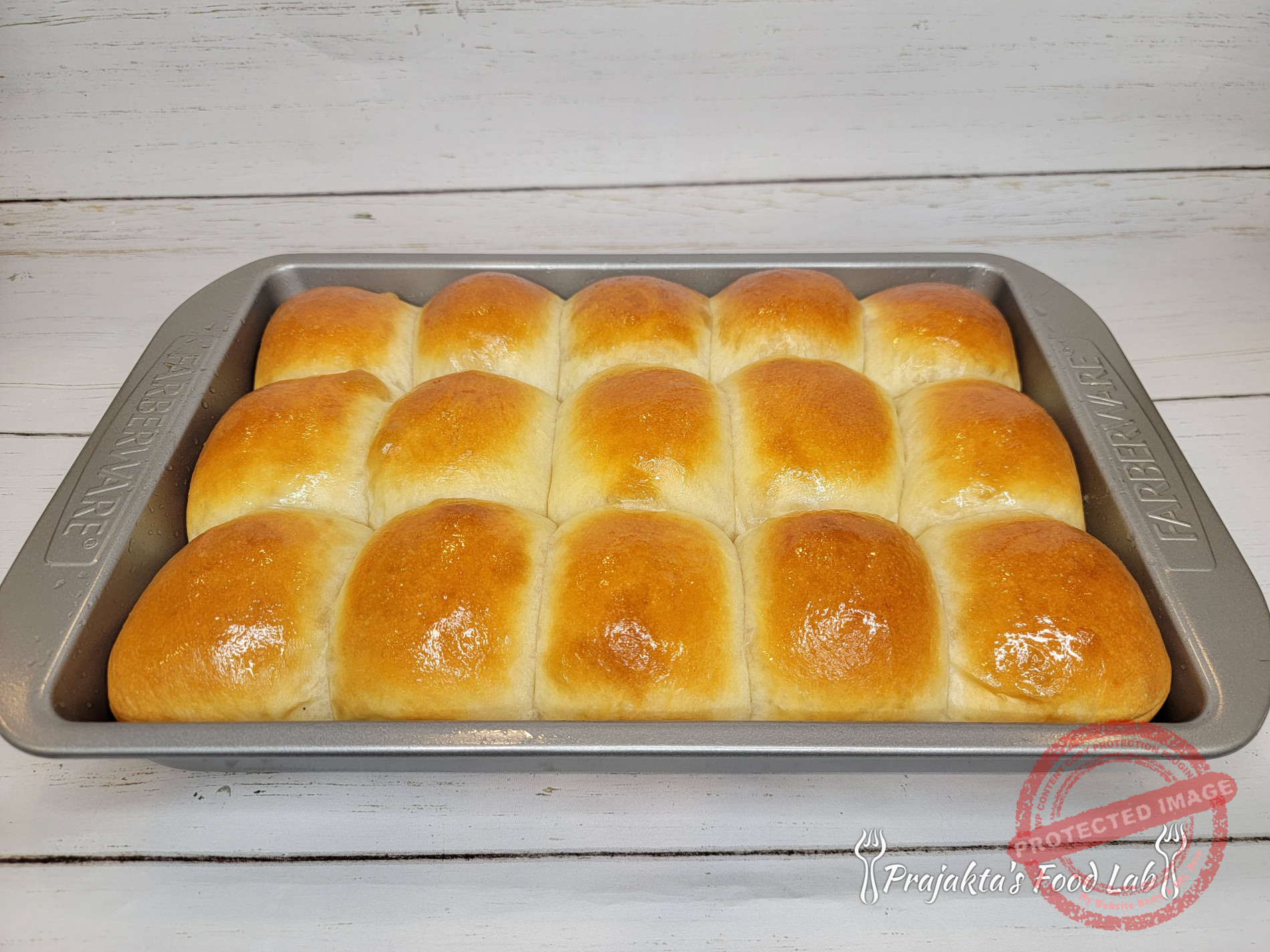
If you are looking for soft, fluffy, rich, and yummy Ladi Pav you have come to the right place. This time and again tried and tested recipe is just for you.

Very easy to make and absolutely impossible to resist these Ladi Pav or Indian Dinner Rolls are the perfect accompaniment for any meal.
Just follow my step-by-step guided recipe and enjoy fresh homemade pav's better than the ones you get in the stores.
Also, keep an eye on all the little tips and tricks in the post below to make the process easier for you.
I hail from the bustling city of Mumbai, and in Mumbai, you get Pav served with just about everything.
Right from just a simple Pav with butter to enjoy with a cup of tea to a scrumptious Batata Vada or commonly referred to as Vada Pav, a lip-smacking Missal Pav, Omelet Pav, the Kheema Pav, and of course who can forget the very famous Pav Bhaji and the list goes on.
Any of these dishes are incomplete without the Pav, Pav adds the oomph factor to the dish.
From street vendors to 5-star restaurants all serve Pav as an accompaniment.
What do you like to eat Pav with? drop a comment below to let me know, who knows I might just find some new combinations to devour with the pav from your ideas.
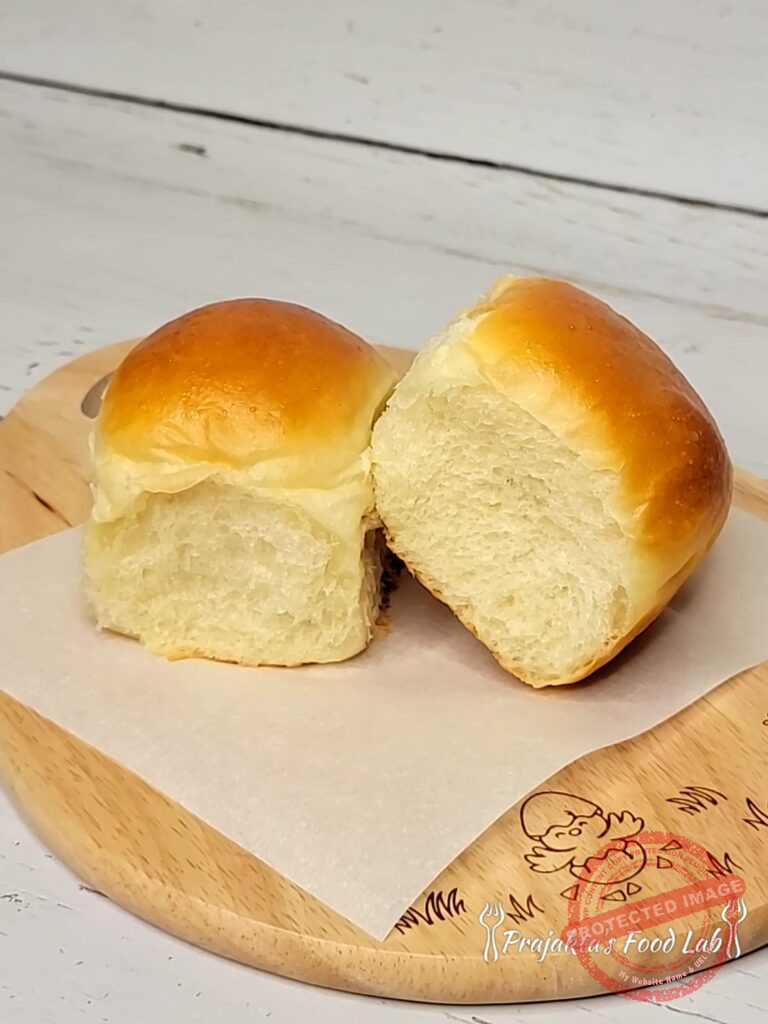
What is a Ladi Pav?
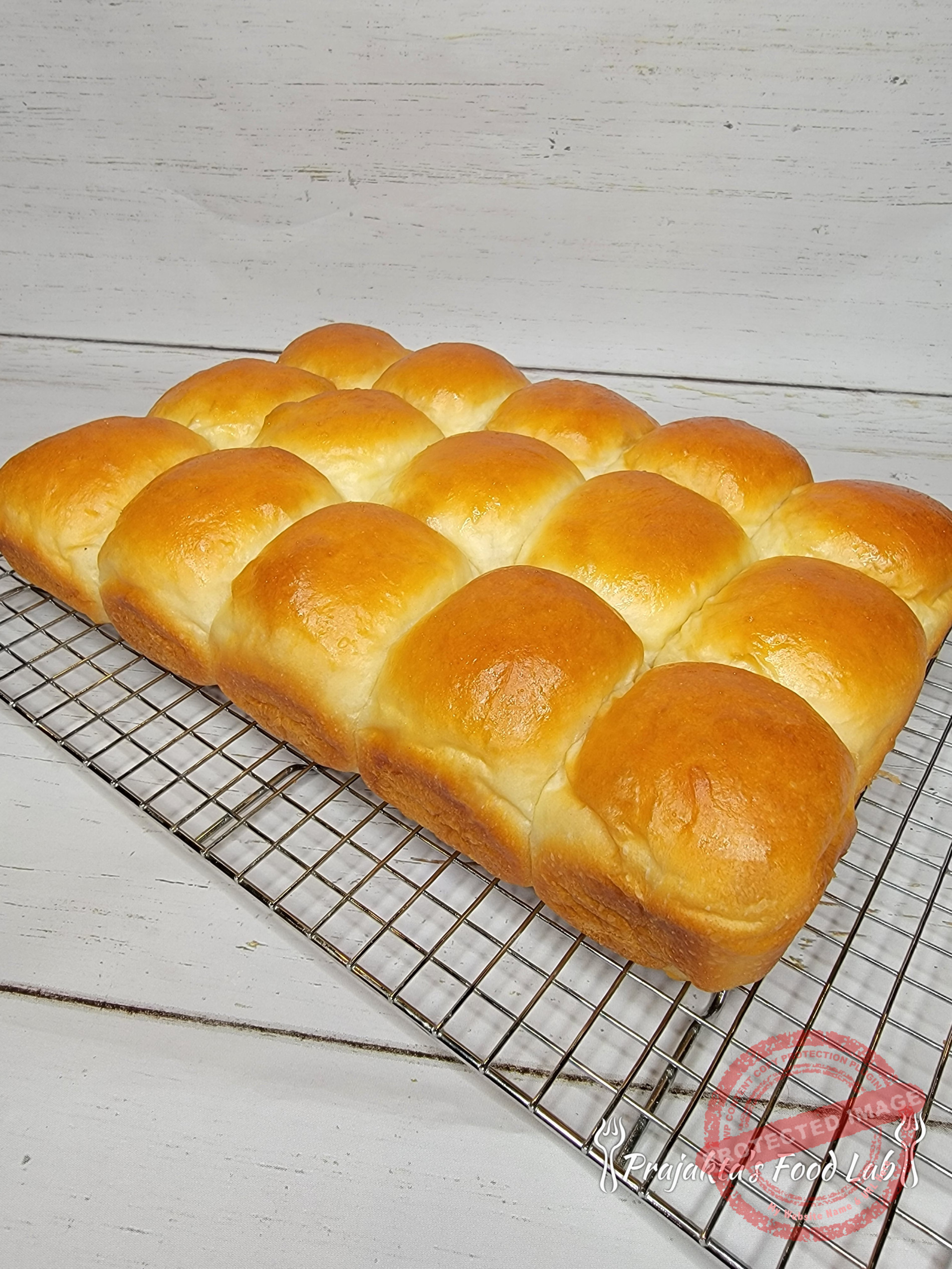
Pav in India means bread and Ladi means tile. So Ladi Pav is a cluster of Pav arranged in a way to make a slab of Pav with a tiled effect similar to the way dinner roll or Hawaiian rolls are made in the US.
However, the dinner rolls or other types of rolls that you get in the US are on the slightly sweeter side. Ladi Pav is not sweet.
Living in Mumbai and having Pav on daily basis you just get so used to it that it becomes a quintessential part of your food habits. This really hit me when I moved to the US and I couldn't find the taste of Pav I grew up eating.
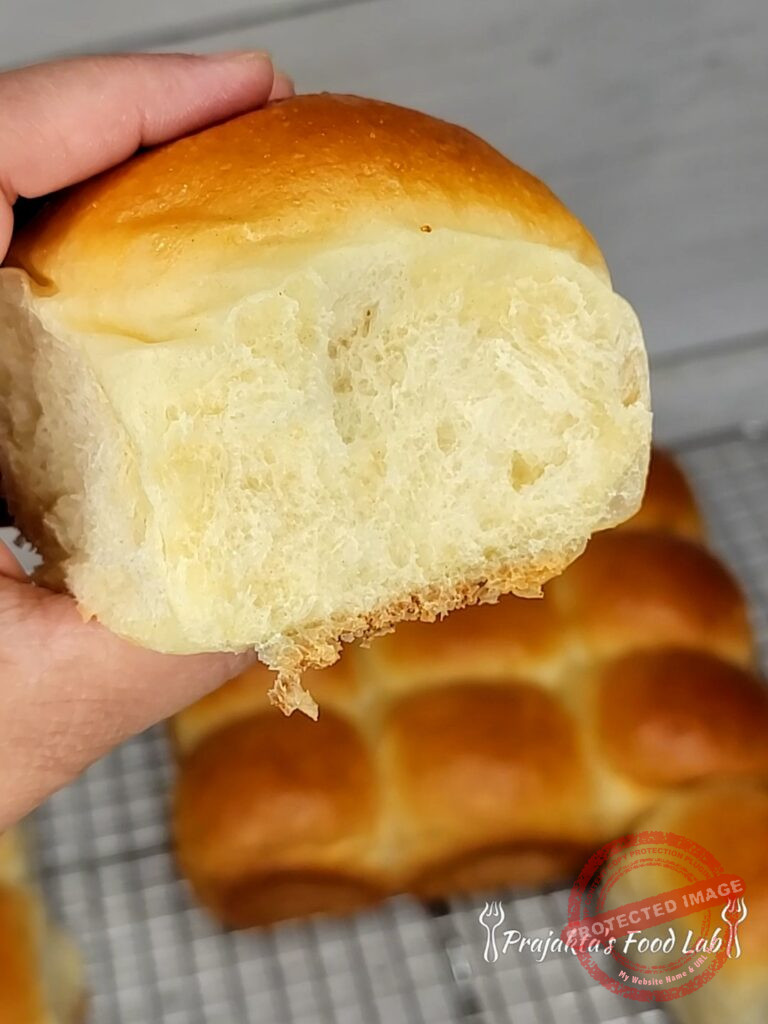
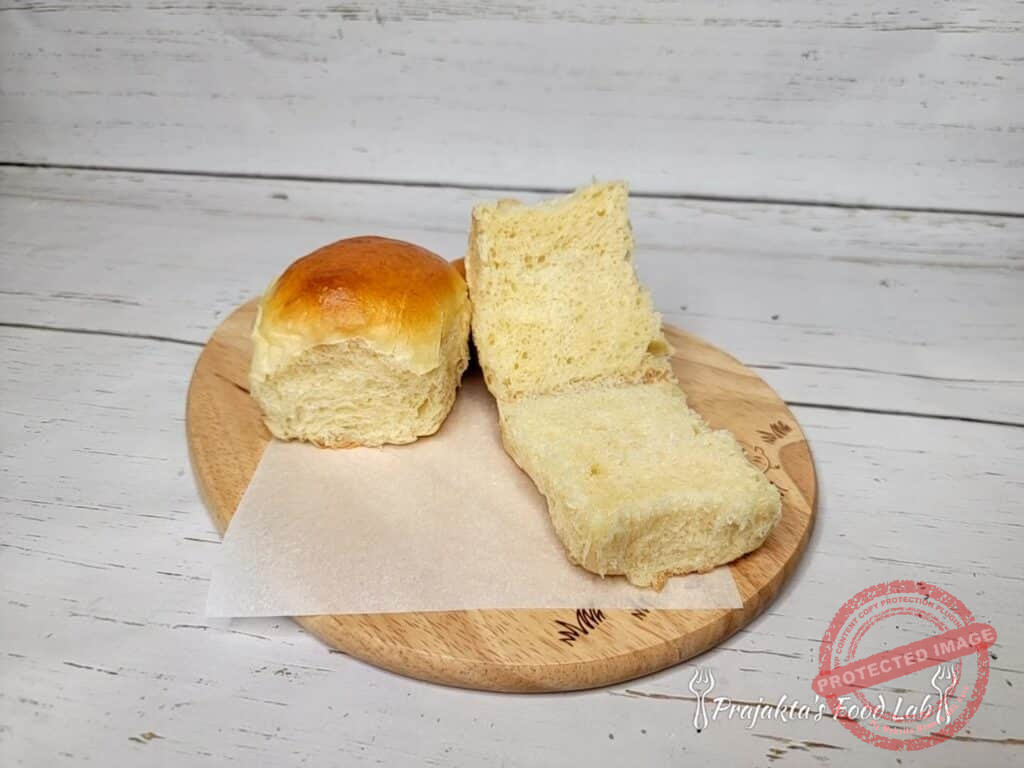
The Dinner rolls that you get in the US stores look very much like Ladi Pav. The first time I saw them in the store I was so happy, I got a packet home, only to realize that they taste so different from the ones back home. The dinner rolls or Hawaiian rolls or potato rolls that you get in the US have a sweet taste to them. I was so disappointed, however, I kept looking for my version of Pav.
I searched for it in so many stores and believe me I found some at the local Indian stores but nothing could match up to the one you get in Mumbai. I guess Mumbai has set a completely different benchmark for Ladi Pav.
I had baked cakes and cookies earlier but never made a Pav or bread. Being green around the ears when it came to baking bread I was pretty nervous but I ventured into making Ladi Pav of my own.
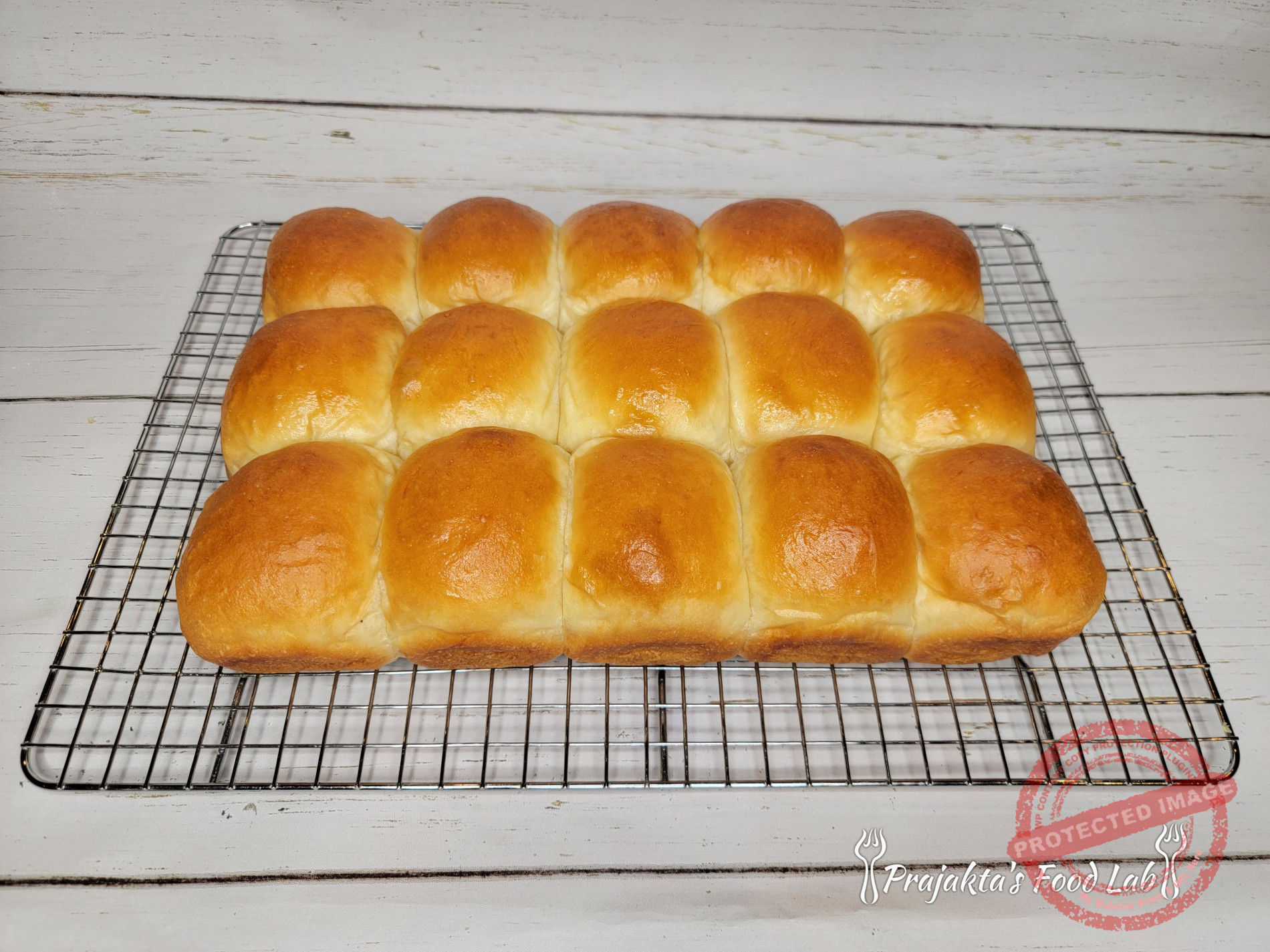
After a lot of tries and experiments with ingredients, process, and oven settings, I got the recipe right but my finish was not great. After doing more research on shaping the dough, I baked a new batch of Ladi Pav and to my surprise, it was just perfect. That beautiful tiled looks, perfect browning, a slight sheen on top, and that amazing soft texture.
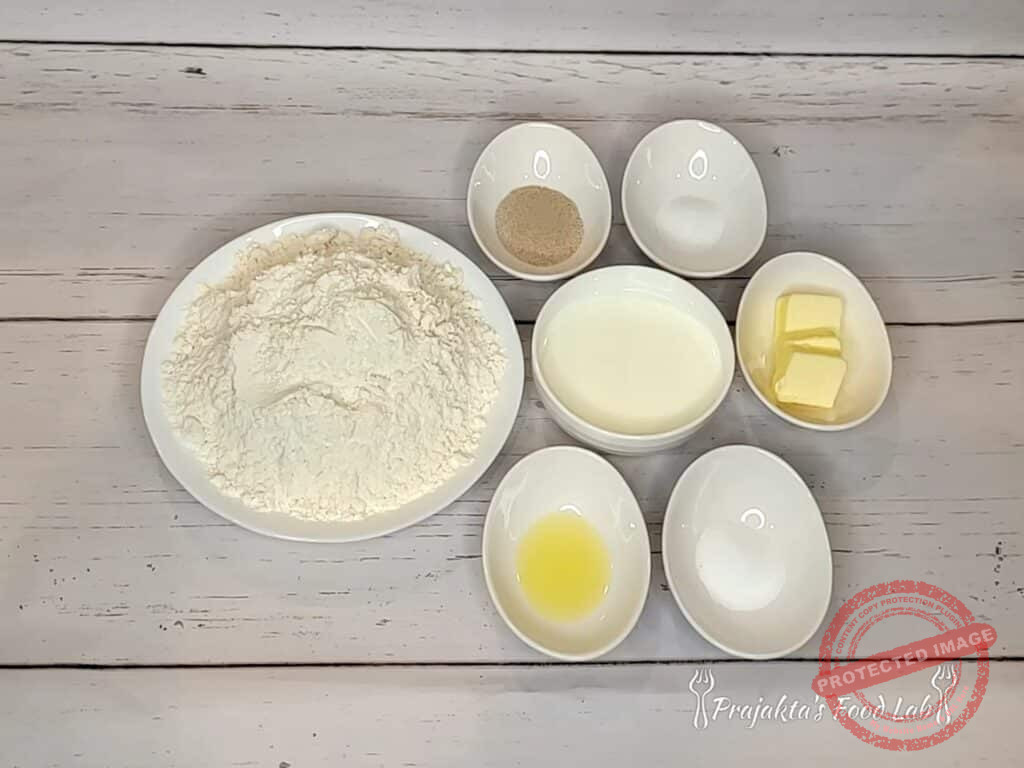
Ingredients needed for Homemade Ladi Pav
- All purpose flour/ Bread flour - I make this Pav using either bread flour or all purpose flour/maida. Both work perfectly well for this recipe.
- Yeast - You can use either active dry yeast or rapid rise/instant dry yeast. Active dry yeast needs to be activated before adding it to the flour while the rapid rise/ instant yeast can directly be added to the flour.
- Salt
- Sugar - needed to activate the yeast.
- Lukewarm Milk / Lukewarm water - I always use milk to make this Pav as it gives it a rich taste and results in soft Pav.
- Butter / Oil - I prefer adding butter as it enhances the taste and gives the pav a nice texture and the it lasts for longer time.
Which Flour should I use to make Ladi Pav?
The best flour to make any bread product is bread flour. However, that said the Ladi Pav turns out equally good using all-purpose flour/maida. I would not recommend using whole wheat flour for this recipe. The ingredients and ratios in this recipe will yield a denser Pav with whole wheat flour as whole wheat flour is less glutenous than the other two flours.
Why is bread flour better than all-purpose flour to make Pav/bread?
The main difference between all-purpose flour and bread flour is the amount of protein. Protein is needed to produce gluten during bread making and bread flour has 10 - 13% more protein than all-purpose flour.
A bread made with either of the 2 flours will rise well, however, the one made with bread flour will have a better structure and will hold the shape well.
If you want to make the pav with all-purpose flour which is what I use most of the time and want to have a better structure then you can replace 1 teaspoon of all-purpose flour for each cup with 1 teaspoon of vital wheat gluten.
This process is just to enhance the structure and texture of the Pav and can be easily skipped.
What is gluten and why is it important in bread making?
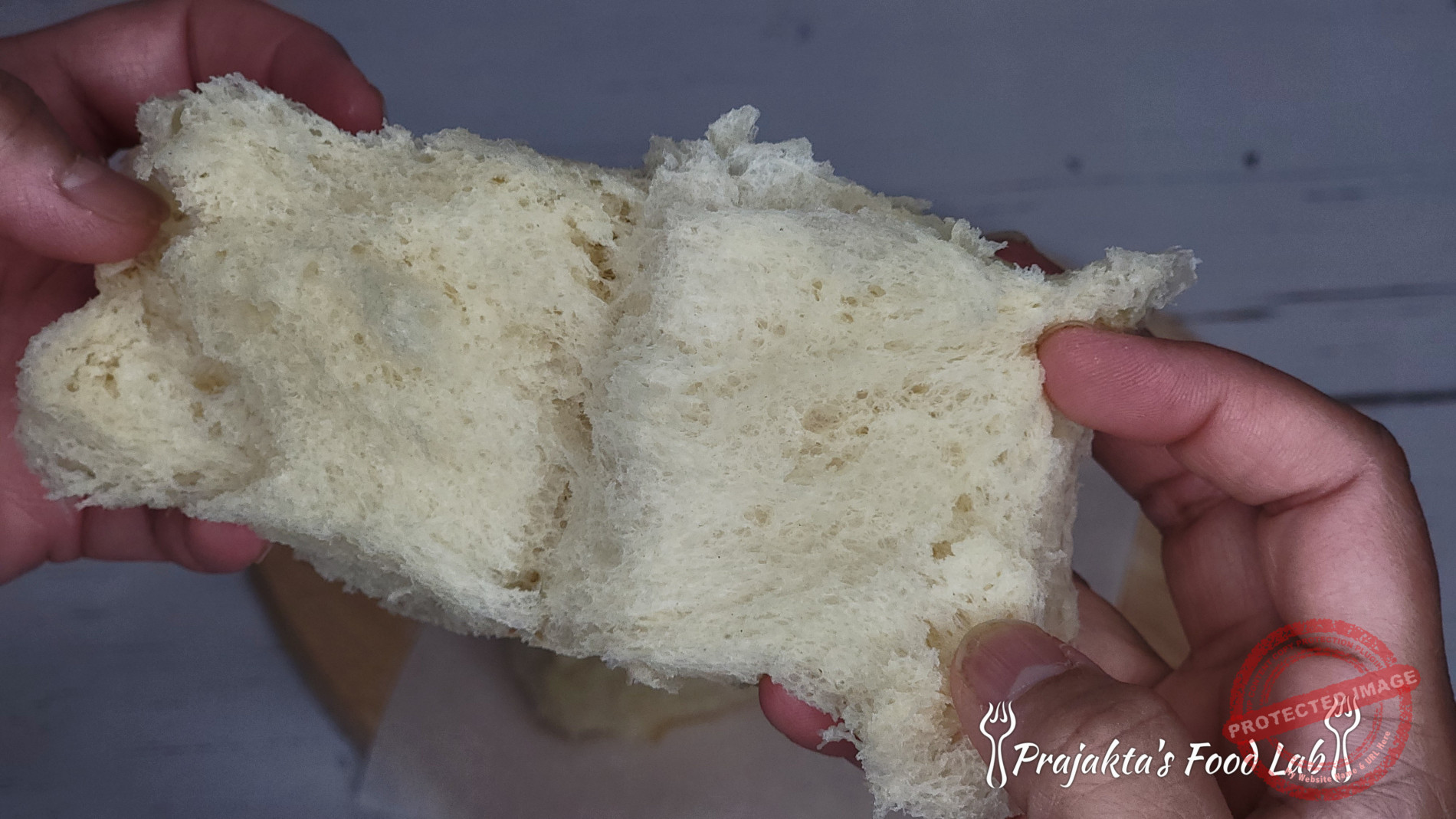
Gluten is a protein that is found in wheat products. It is a very important part of bread making. Gluten is the one that creates a net-like structure that you see in the bread. It acts like a binder that holds the dough together and gives a stretchy quality to the dough.
It helps the dough to rise by creating the net that holds the gas bubbles together and giving the bread its beautiful texture. The gluten protein is also the one that gives a fluffy texture to the Pav.
Why do you add milk to the Pav/bread dough?
Milk gives the Pav a rich and velvety texture. It also makes the Pav soft, browns it well, and gives it a beautiful crust. Milk acts as an enhancer in the bread/Pav dough something similar to what an egg would do in bread with eggs.
Can you use water instead of milk in the Ladi Pav recipe?
Yes of course you can use water instead of milk to make the Ladi Pav. It will change the texture of the Pav a bit. It will make the Pav less rich and with a slightly crispy crust.
But do you know a secret? that is how the Pav is made that is available at the Vada Pav or Pav Bhaji street vendors back in India.
When you use water instead of milk, replace 1 cup of milk with 1 cup water and 1 and ½ teaspoon of butter.
The extra butter will help keep the bread moist and give it a buttery and soft texture.
Step by step process for making Ladi Pav
Step 1 - Activate the yeast
Take ⅓ cup of lukewarm milk about 105F - 110F, the perfect way to test the temperature is by putting a finger in the warm milk bowl. If you can comfortably hold the finger in the bowl of milk for a few seconds it's right for yeast too. Neither hot nor cold.
Add 1 teaspoon sugar and 2 and ½ teaspoon of active dry yeast to the ⅓ cup lukewarm milk.
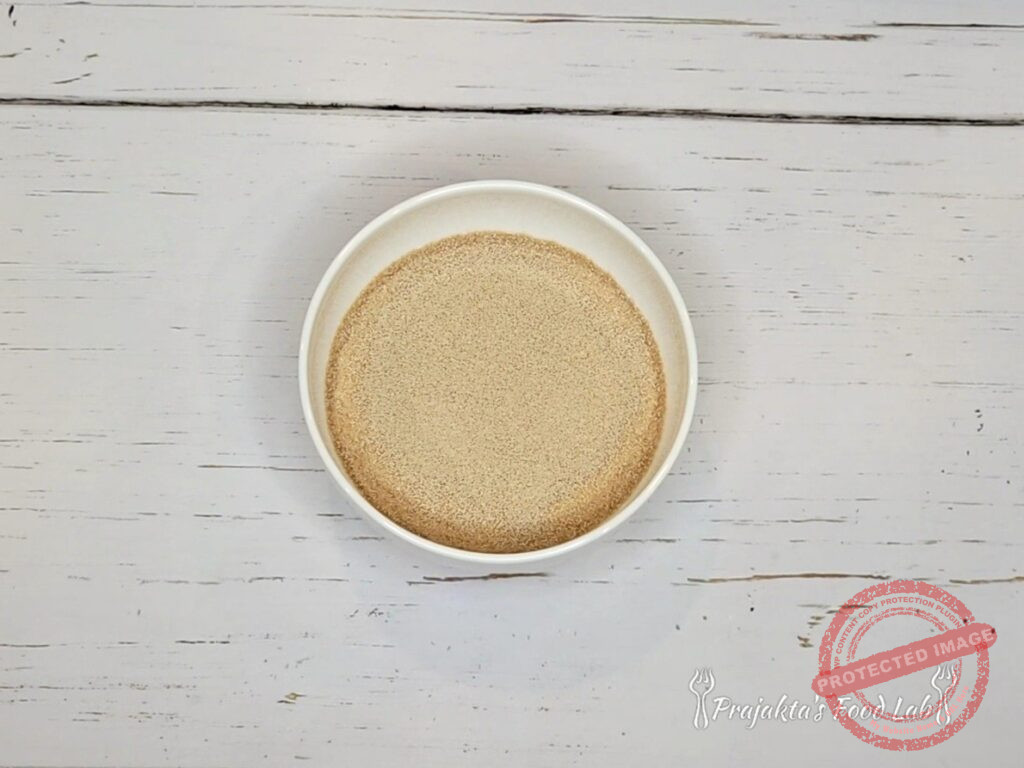
Stir it well and let it rest for 10 to 15 minutes till the yeast is activated and the mixture becomes frothy.
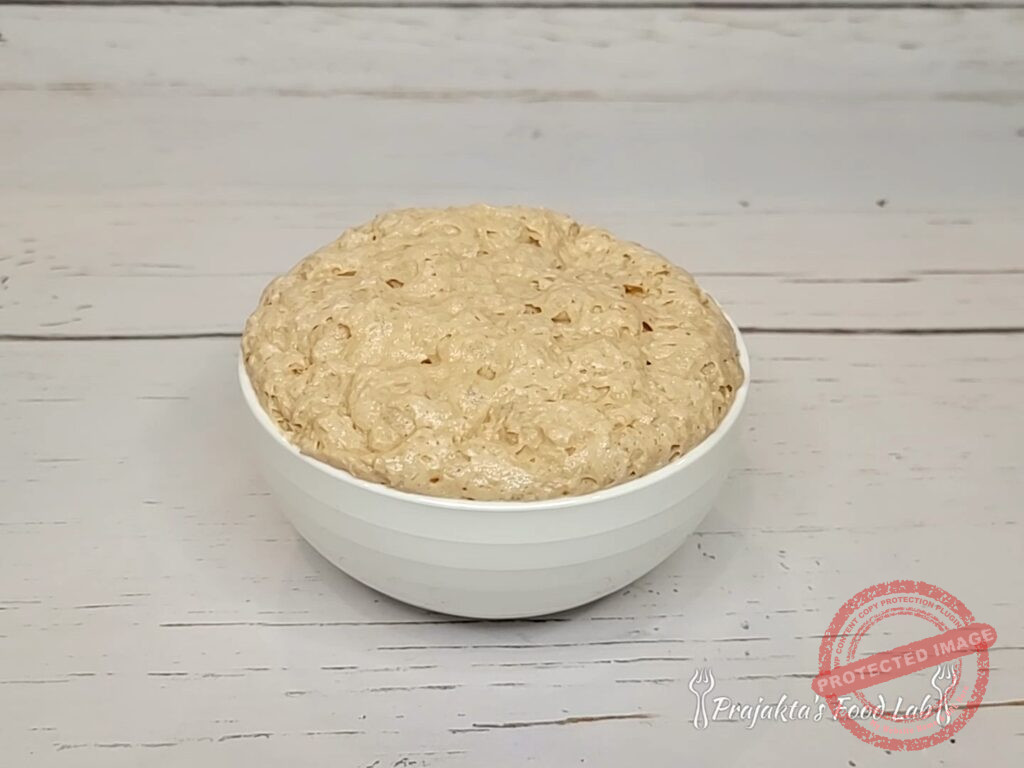
This step is very important while using active dry yeast. This is a test for the quality of yeast. If the yeast does not froth or bubble up then it is not good for making bread. This way you will avoid the trouble of making dense bread due to expired yeast.
Step 2 - Making the dough
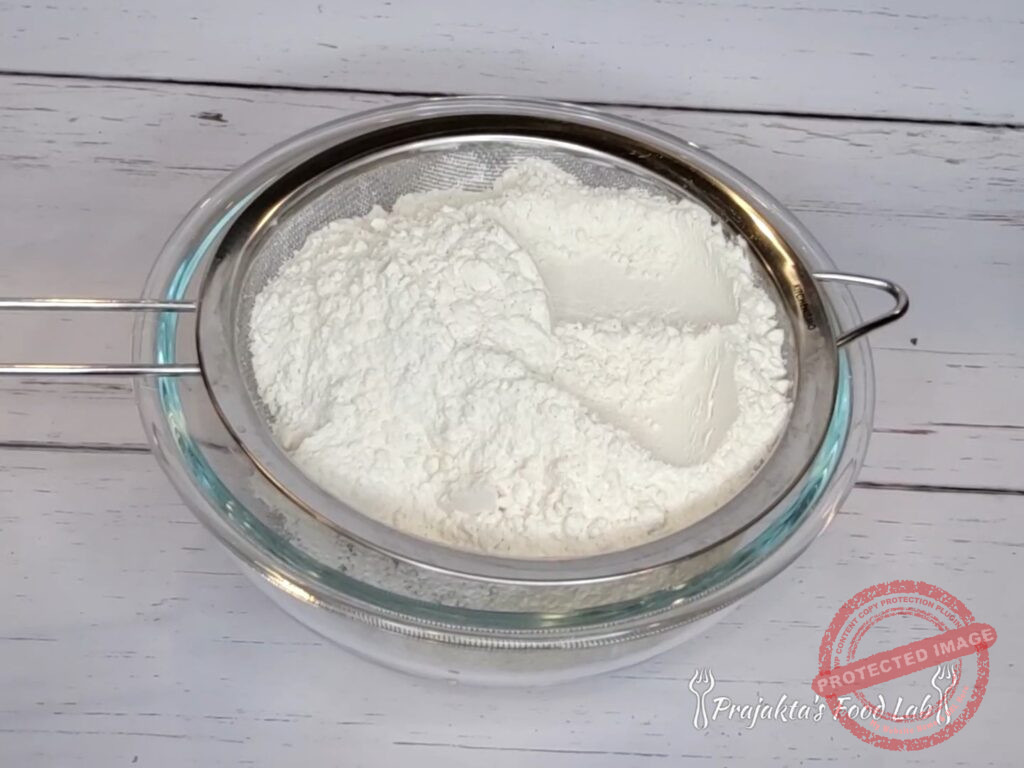
Sift the 4 cups all-purpose flour and 1.5 teaspoon salt in a large bowl or the bowl for a stand mixer then add the remaining warm milk and the proofed yeast mix.
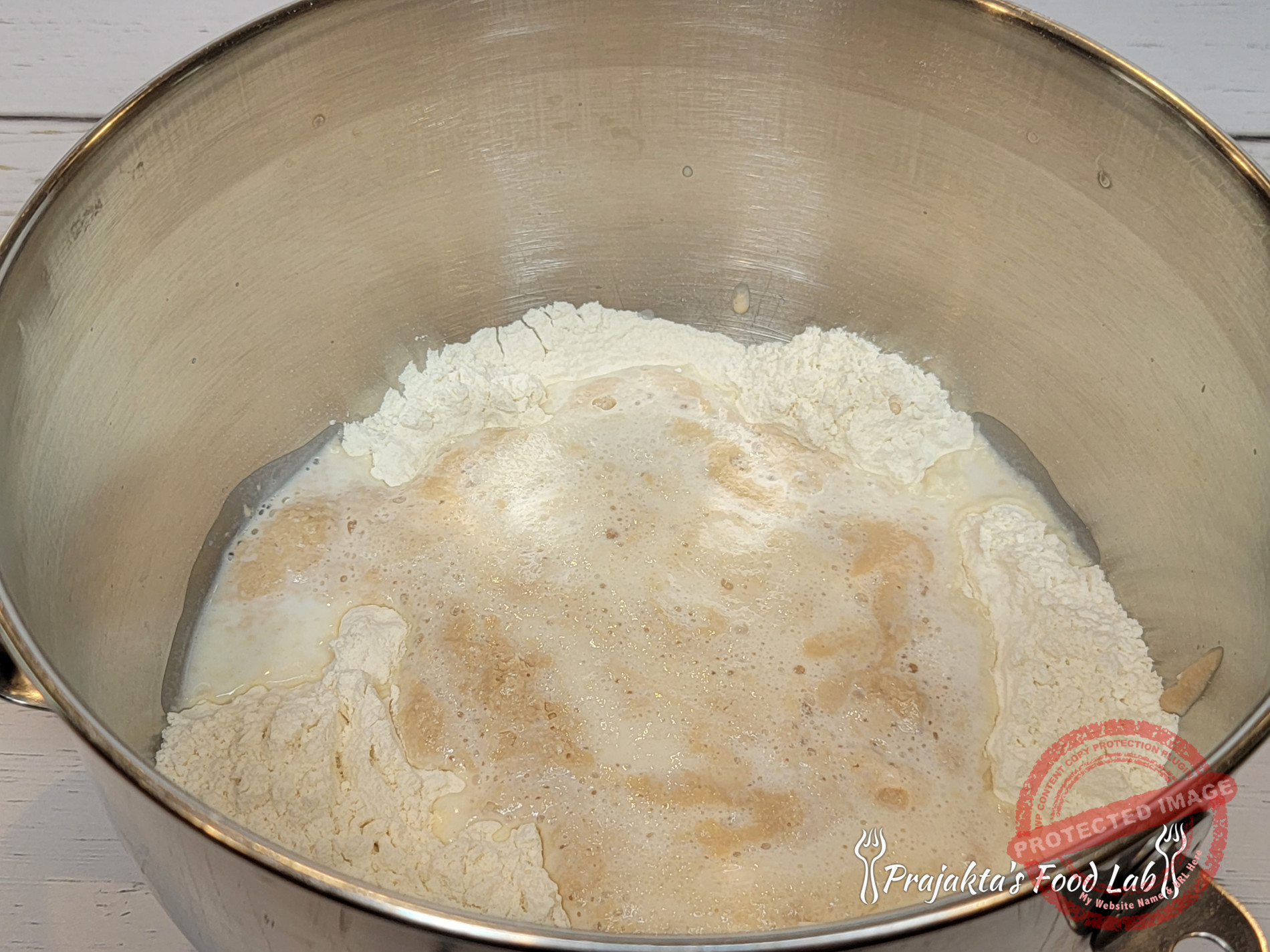
Mix it all together using a spatula till all comes together. This is easier than using your hands to get wet and dry ingredients together.
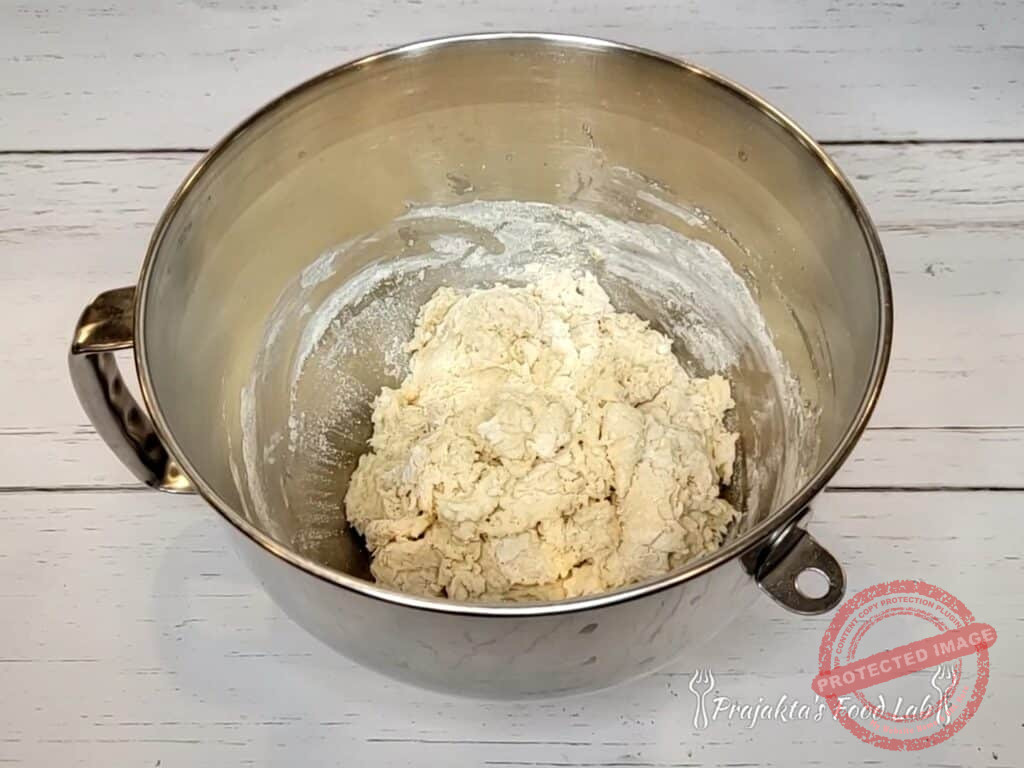
Now if you are using the stand mixer, use the hook attachment and start the machine at a low setting like either 1 or 2 and let it knead for at least 10 to 15 minutes.
If you are going to knead by hand, you will need a large clean flat surface for kneading. Dust the work surface with little flour and then get the lightly mixed sticky dough on the workbench. using your hand start kneading the dough.
After a couple of minutes when the dry and wet ingredients are well mixed keep kneading the dough using the stretch and fold method. see explanation below
While kneading the dough keep scrapping the surface using a bench scraper or any similar tool to remove the sticky dough from the work surface and get it back together for kneading.
Initially, the dough for ladi pav will be very sticky but don't be tempted to add extra flour without kneading it for a few minutes. Adding extra flour will result in dense bread.
If the dough is dry then add a teaspoon of milk at a time and keep on kneading.
After kneading for about 5 to 7 minutes add 2 tablespoons of unsalted butter and keep kneading. At this point, if the dough is still very sticking then add a tablespoon of flour and keep kneading. Be careful to not add too much extra flour.
Also when you add the butter the dough will start losing some of its stickiness and start forming a soft pliable dough that is stretchy but not sticky. Keep kneading for another 7 to 10 minutes till the dough comes together.
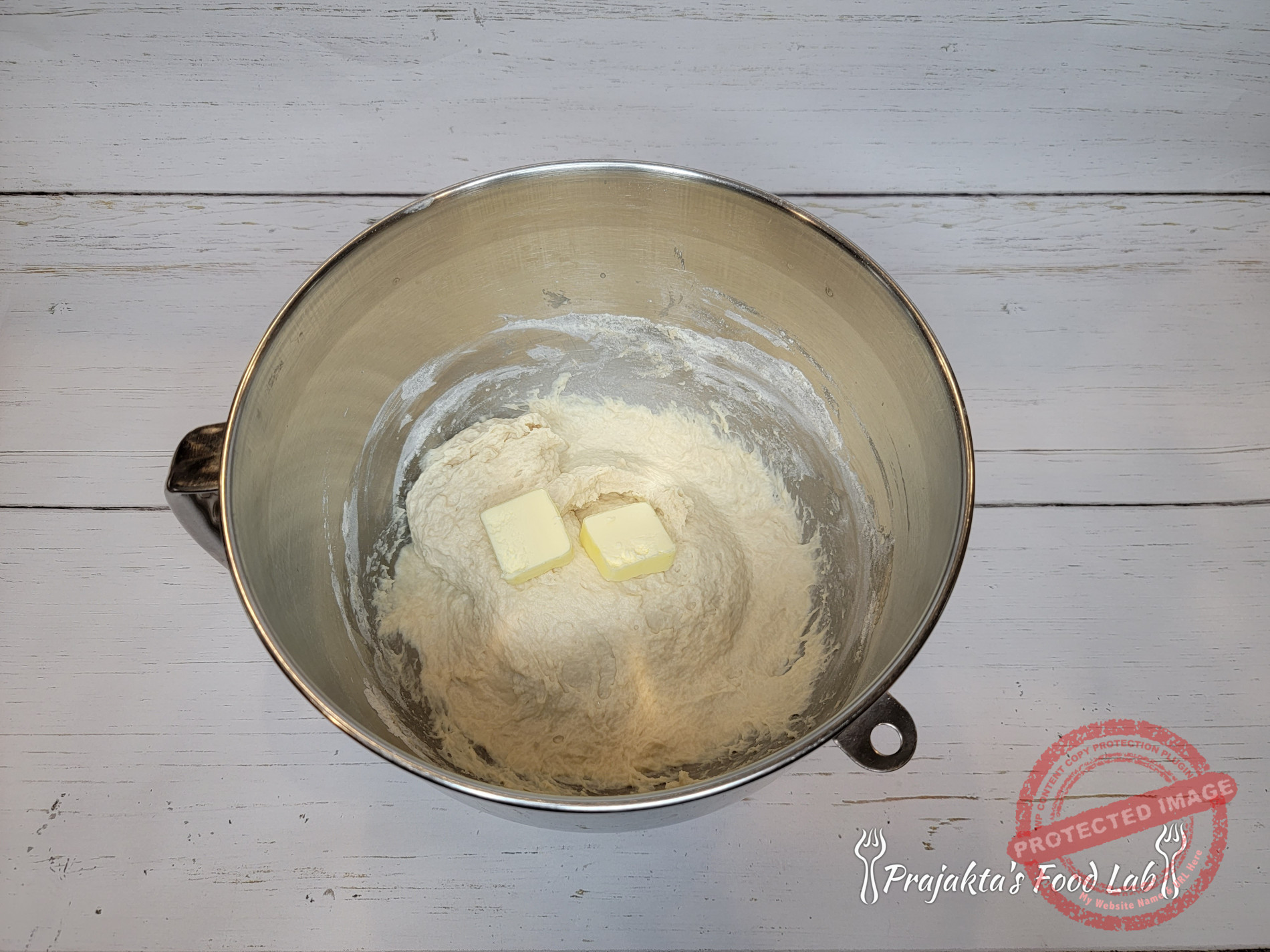
If you are using a stand mixer to make the ladi pav dough add butter after kneading for 5 minutes and then let it knead for another 10 minutes. Once the dough is ready it will all come together and stick to the hook with the bottom of the dough still sticky and anchored to the base.
If it is still stuck all over the bowl then it has more moisture than needed and if it all forms a ball with nothing stuck to the bottom then the dough is too dry and needs hydration.
Get the dough from the stand mixer onto a workbench or work surface that is dusted with flour and knead it for a couple of minutes to make a dough ball.
Once you are done kneading, check the dough by poking the finger in it. If the dough bounces back it is ready to be set for proofing.
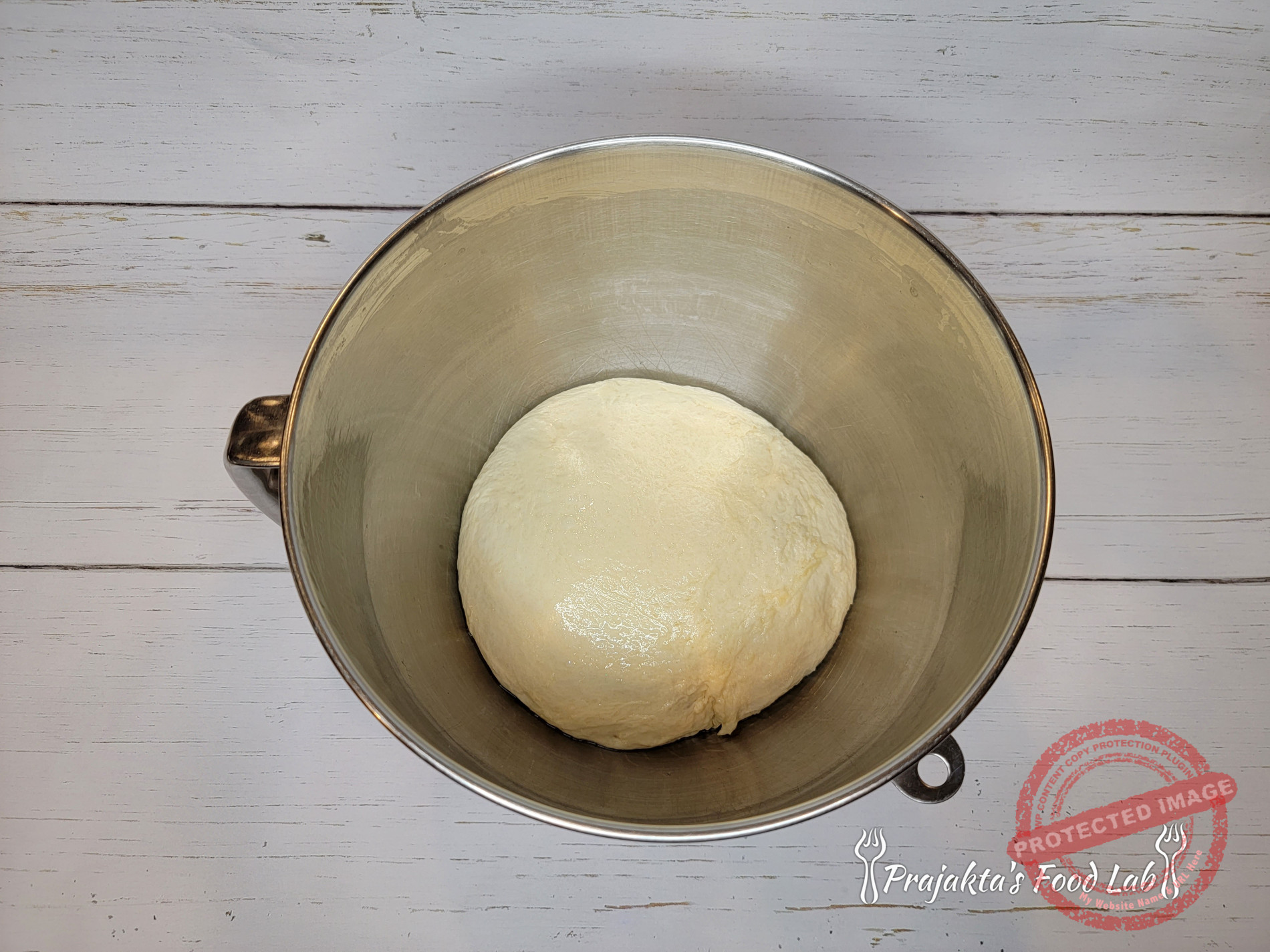
Step 3 - Proofing the dough
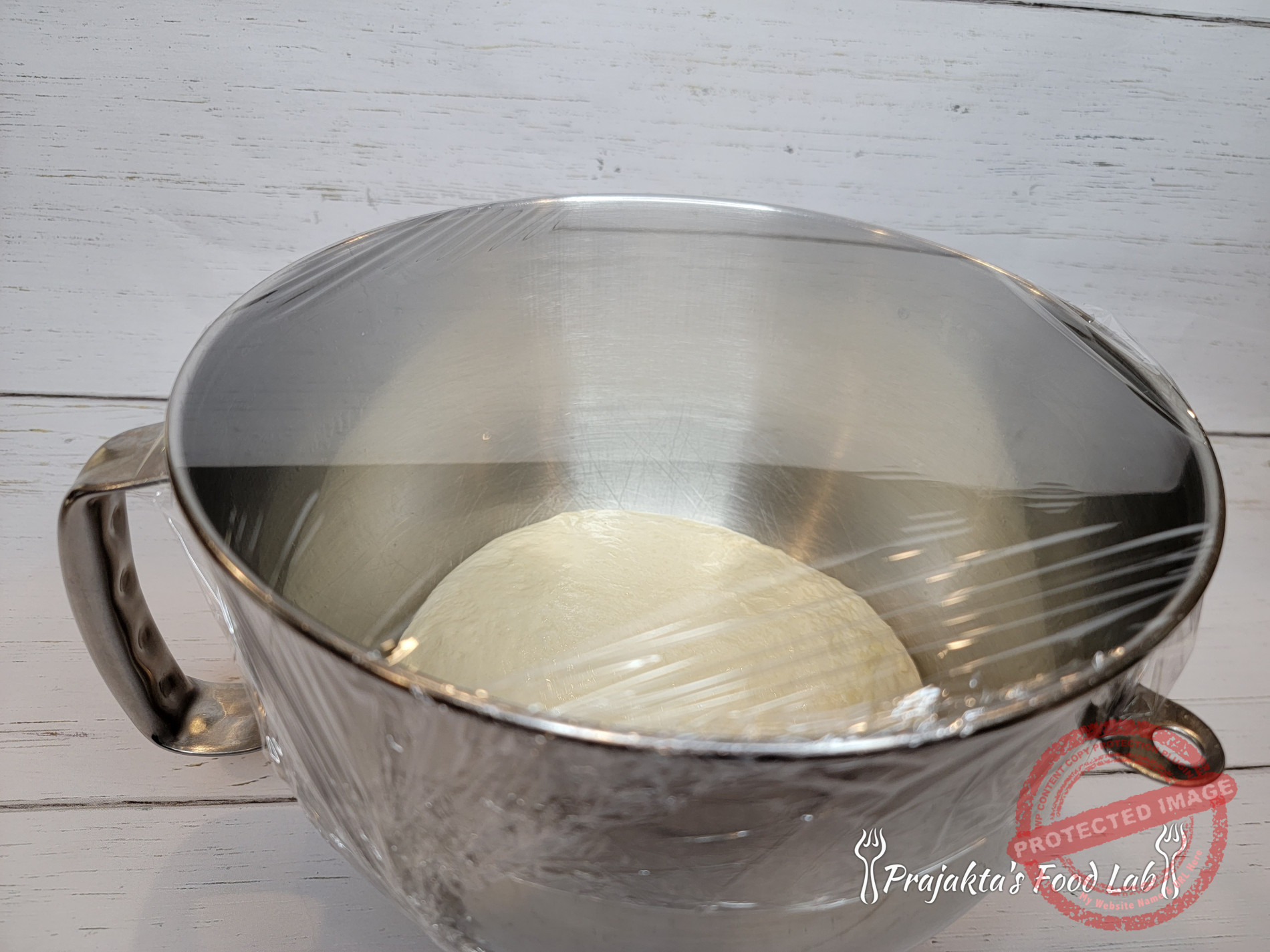
Tuck in the sides of the ladi pav dough to form a smooth round dough ball. Transfer the dough to a greased big bowl. The bowl should have enough room for the dough to at least double up. Brush some oil on the dough and cover the bowl with a cling wrap or a clean towel/napkin. Set the bowl aside in a warm place to proof for about 1 hr to 1.5 hrs.
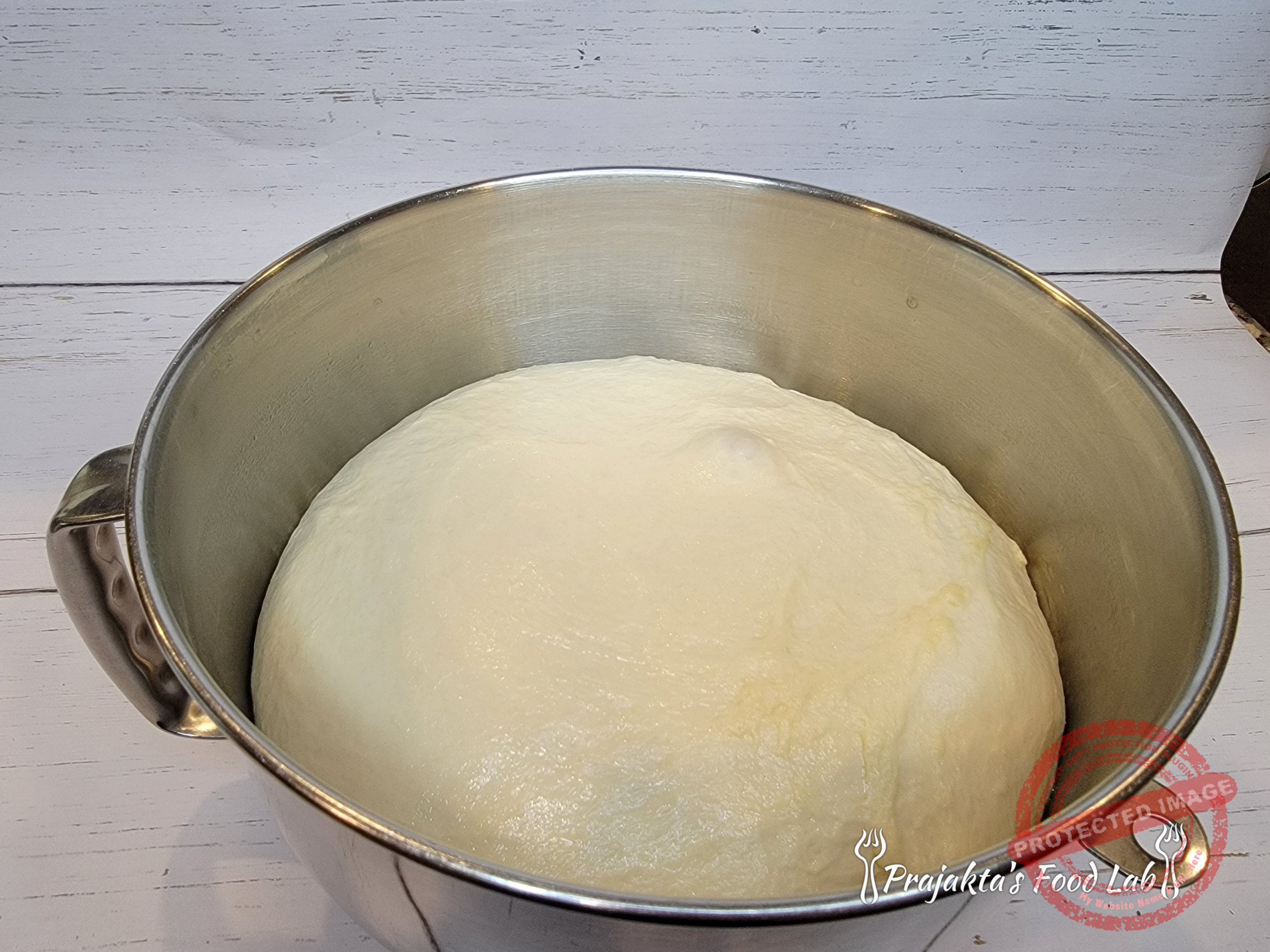
Step 4 Last kneading of the dough
Once the dough has doubled up we move on to the next step, just punch the dough and deflate it. I know it sounds like really?? all that blowing up of dough just to punch and deflate it. Yes as much as the proofed dough looks amazing, don't be tempted to use it just as it is as you will get an uneven-shaped Ladi Pav that doesn't rise well and will have random dense parts.
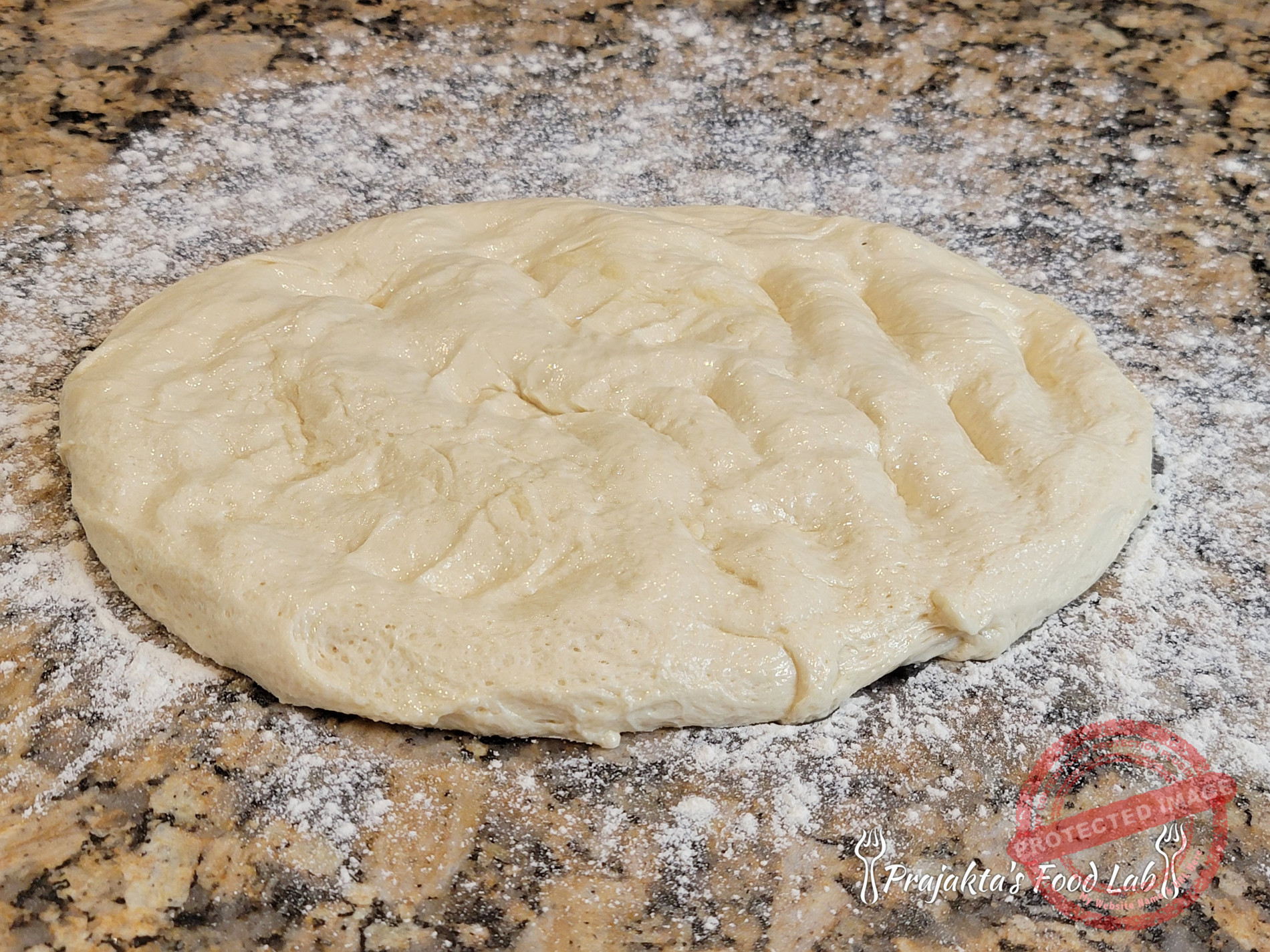
After the dough is deflated, transfer it to a lightly flour-dusted work surface.
Knead the dough one last time using the stretch and fold method for about 3 to 5 minutes. If the dough feels too sticky sprinkle a teaspoon of flour over it and keep kneading.
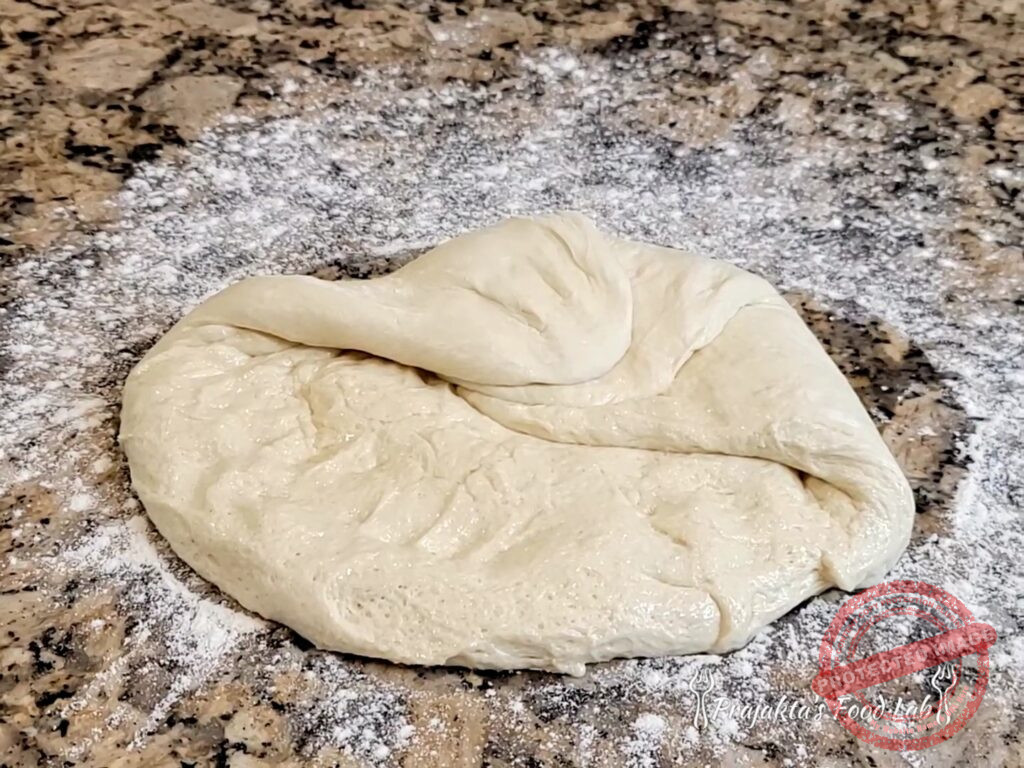
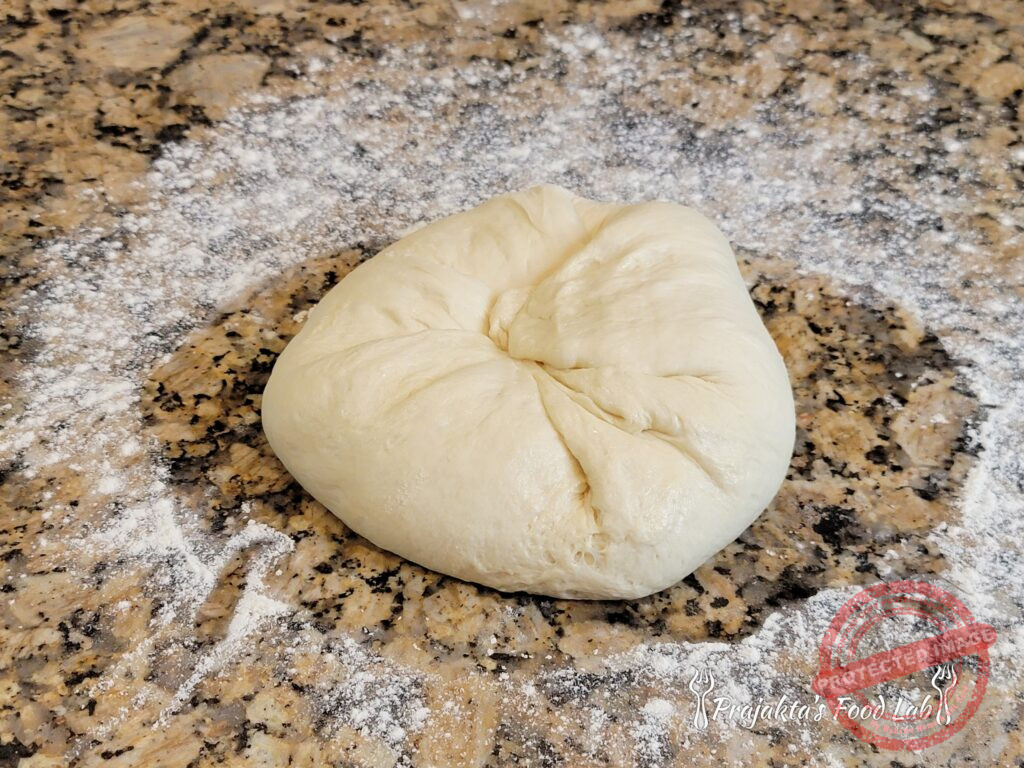
Step 5 - Shaping of the dough
Do you like the way the store-bought pav looks? Smooth and beautiful on the top.
If you want that finish then following this step correctly is very important. I know it will seem difficult when you do it the first time but a little practice and you will be perfect at it. Sometimes some things look difficult but they actually aren't. Getting that Ladi pav look is all about technique.
Roll the dough into a thick flat circle, cut the dough into equal parts using a knife or a bench scraper. you will get about 15 to 16 pieces from this dough.
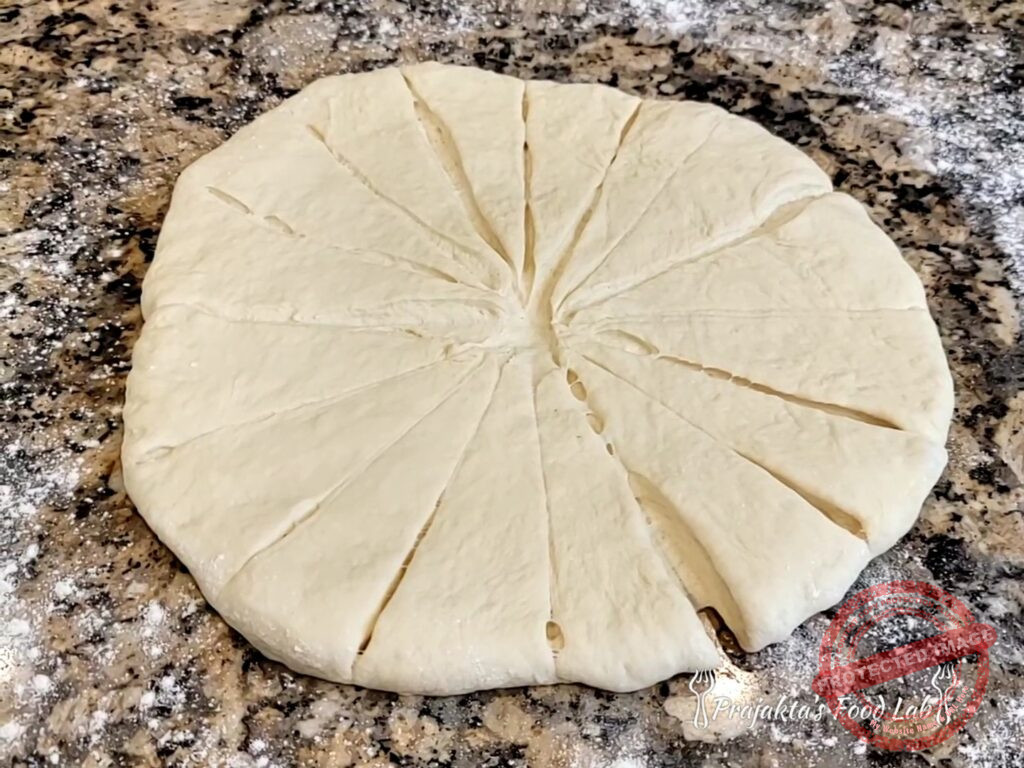
I usually prefer weighing the Ladi pav dough ball to make all of them in equal size. If you like baking then I would suggest that you invest in a measuring/weighing scale.

If you are using a weighing scale then each ball should be 63gm-65gm. If you don't have a weighing scale you can just eyeball it to be of the same size.
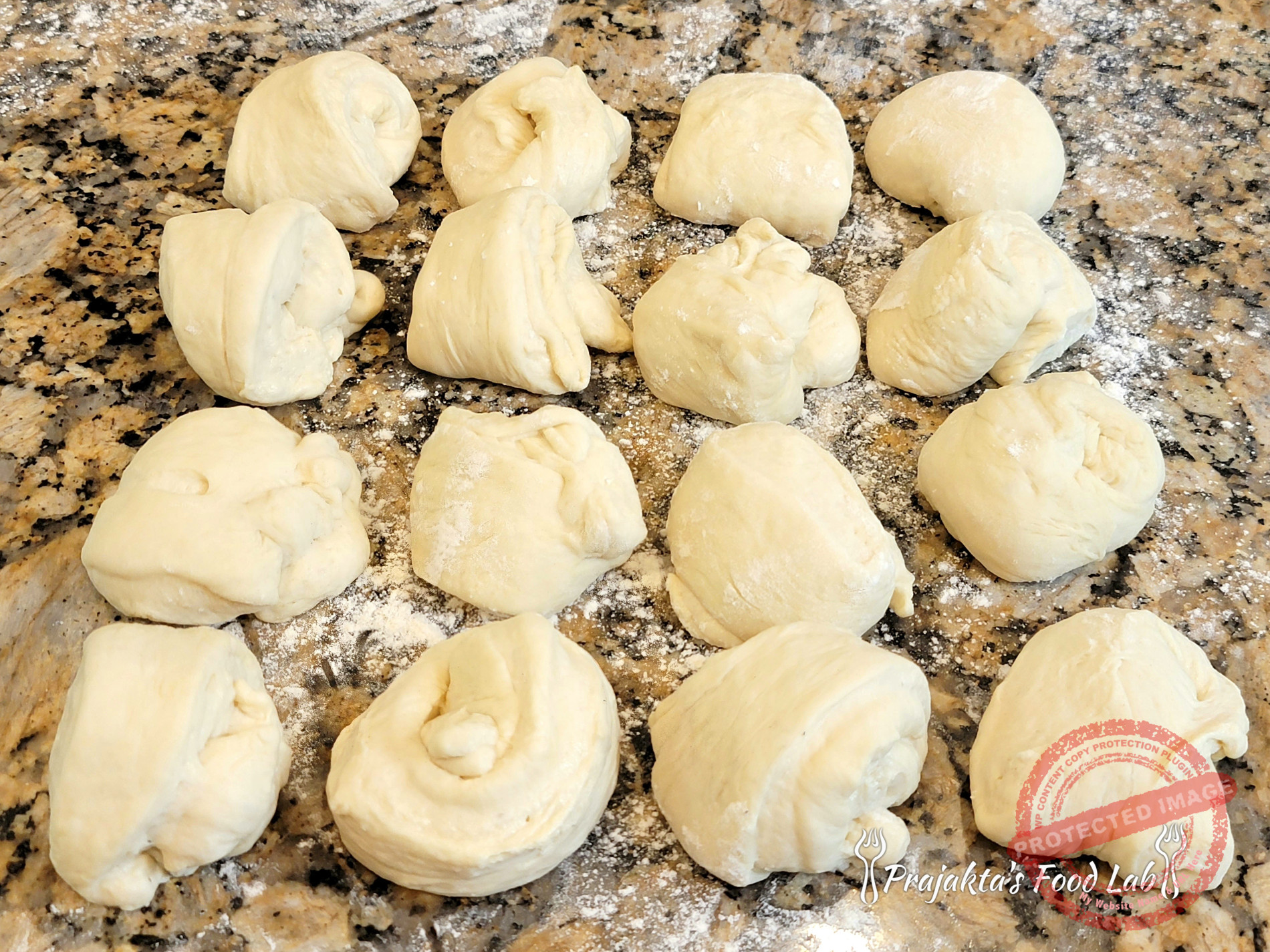
Shaping is very important to get even baking and smooth top. Let me teach you how to shape the ladi pavs.
Take the dough ball and pull one end of the dough, stretch it out a little, and fold it over the center. Keep repeating this process on all the sides till the side facing up in the baking tray becomes smooth and stretched. When you pull out and fold over in the center the outer skin or surface of the dough gets stretched giving a smooth top.
Once that is done then flip the dough ball. Using the flat of your hands with your palm facing up, start tucking in the dough. With light pressure taking some dough on the edge tucking it downwards center rotates your palm like you are spinning a top. This process will stretch the skin on top and also seal and close the bottom.
This might seem difficult initially but with a few tries, you will be able to master it.
Place them in a greased baking tray with one finger space in between each. The tray would fit 15 ladi pavs. Cover the tray with a tray lid or a damp cloth and let it rest in a warm place to proof for the second time.
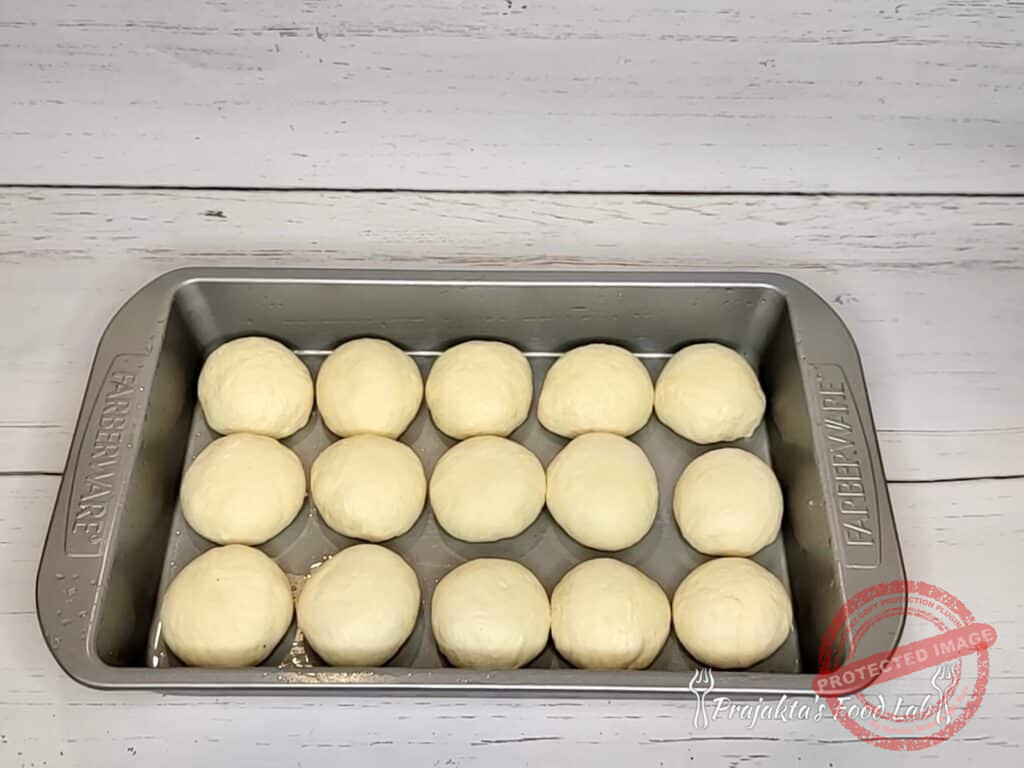
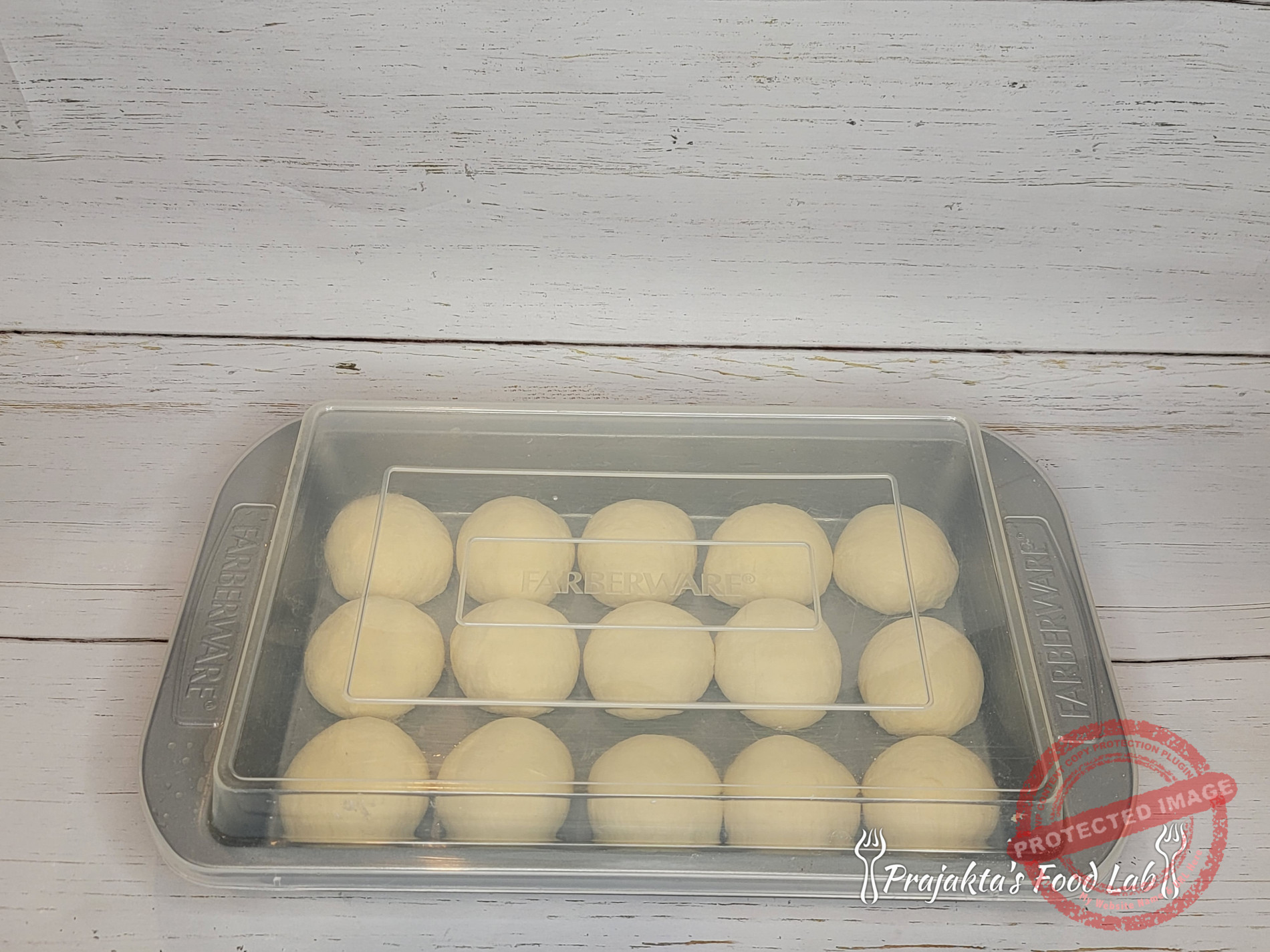
Proofing time could be anything from 30 to 50 minutes depending on the weather. In a warm and humid place, 30 minutes would be sufficient, however, here in the US, I let them proof for about 40 to 45 minutes.
When you check the tray after the set time if the ladi pav balls have expanded and the sides have touched each other then it's ready for baking.
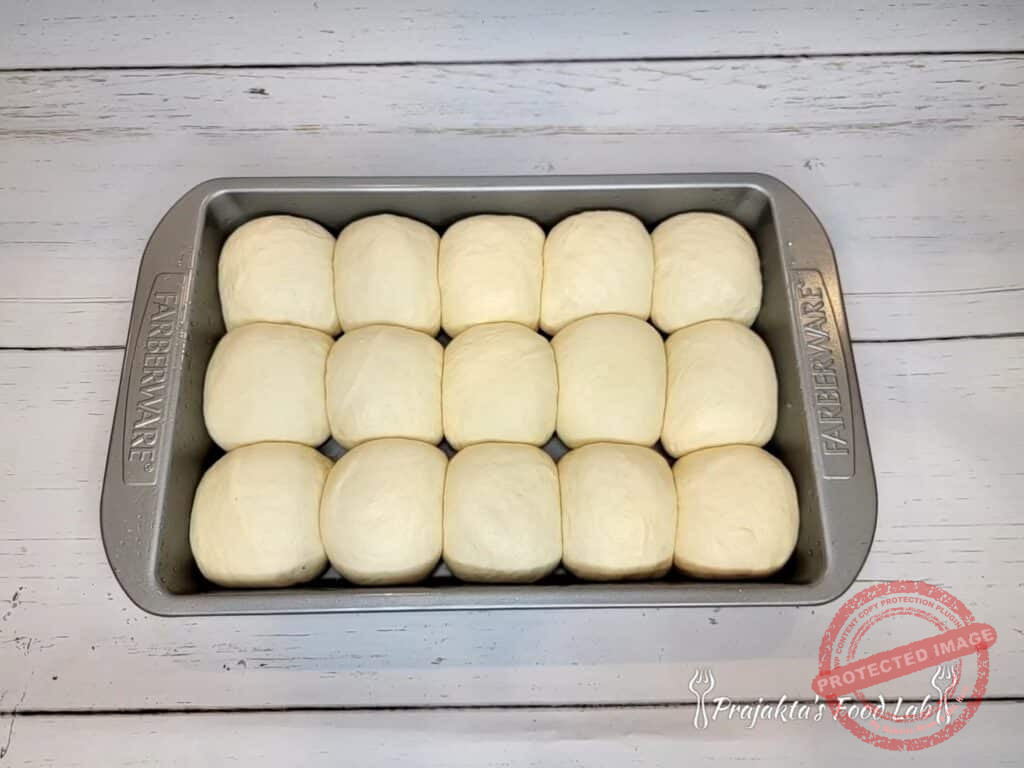
Step 6 - Let's bake them
Preheat the oven to 400F, let the oven be preheated, and ready at least 10 minutes before you bake the pav. This will help in even baking of the Ladi pav.
Now let's work on that beautifully browned top, for the perfect golden-brown crust brush the top with egg wash. Egg wash is basically just a well-whisked egg that you very gently brush on top of the Ladi pav.
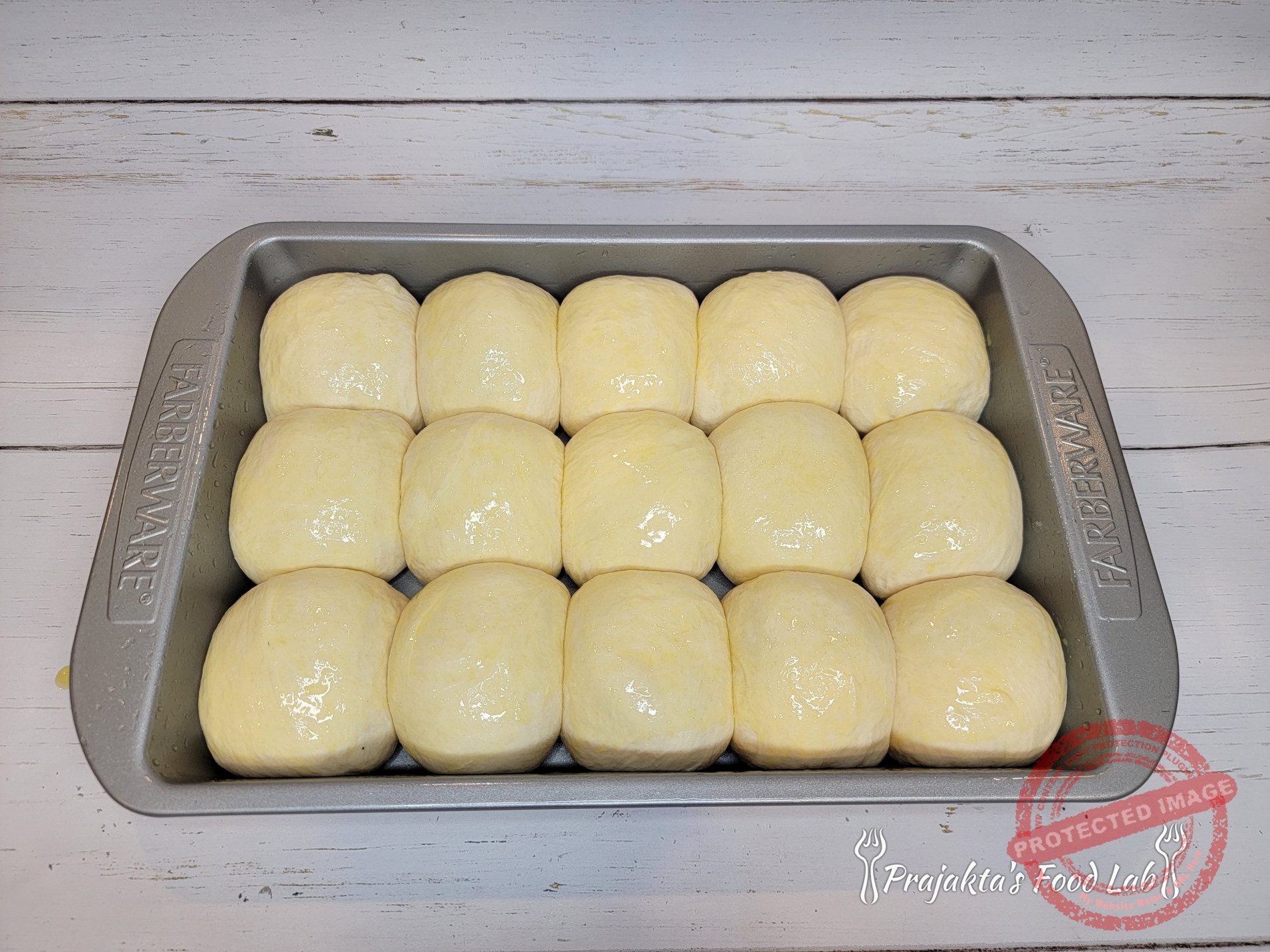
However, if you want to do a complete eggless version you can brush the top with milk. This will give you a slightly darker brown crust but that doesn't impact the taste.
Bake the Ladi pav for 16-18 minutes or until the internal temperature is 200F-210F. I remove mine at 16 minutes.
Step 7 - Finishing touches
When you get the pav out of the oven the top will seem a little hard, sometimes I like knocking on them to hear a hollow sound. Those are the perfectly baked bread/pavs.
Brush them with room-temperature butter and they will soften as well as look glossy.
Get it out on a wire rack to make sure that the air can circulate which stops the crust from becoming soggy.
Let it cool for 15 to 20 minutes to enjoy the best taste. I know it's tempting to just dive into them as soon as you get them out of the oven. I have done that on numerous occasions. The freshly baked hot pav tastes awesome but is a little chewy.
I love slathering warm bread with butter and just devouring it. Enjoy the freshly baked Ladi pav with anything you like.
What is a stretch and fold method for making a dough for Ladi Pav?
Stretching and folding add strength to the ladi pav dough using a very simple series of actions. You stretch the dough out using the base of your wrist, and once it's stretched enough you fold the stretched part over itself.
This stretch and fold pattern takes less time to develop the gluten in the dough as compared to the traditional kneading method. And it surprisingly requires much less effort while kneading and hence less hand and back pain.
Why do you need to cool the ladi pav?
When you get the ladi pav out of the oven the cooking process has not yet stopped. When you let it rest for 10 to 15 minutes the cooking process gradually stops. A bread fresh out of the oven is a little dense and chewy. Once you get it out on the rack it aerates and becomes light and fluffy.
Some important tips and FAQs
I have tried to cover as many details as possible to make the ladi pav process easy for you. Here are some other guidelines just in case you have some concerns.
Always activate the yeast
While using active dry yeast it is very important that you activate the yeast before proceeding. This will save you the time of rework in case the yeast is not good and also adding it directly to dry ingredients does not work.
Always measure the ingredients
Ratios and proportions are very important parts of baking. So use the right tools and measure the ingredients correctly. Also, fill the flour cup lightly and not by pressing down too much and adding extra flour than required for the recipe.
Always invest in good baking equipments
This might not look significant but it's important to use good baking equipment. And if you love baking definitely invest in a bench scraper and weighing scale.
Always sift the ingredients
When you sift the dry ingredients you not only break up all the lumps but also mix all the dry ingredients together and make the flour airy and easy to mix.
Do not add extra flour
The ladi pav dough needs to be soft and pliable, slightly tacky, and well hydrated. If you add extra flour to it the dough will become too dry and will result in dry and dense pav. If the dough feels too sticky try adding a teaspoon of butter or oil to roll the dough. This will bind the dough together without making it dry and dense.
Keep the dough covered while proofing
Keeping the dough covered will help retain the moisture in the bread and prevent it from cracking while baking.
Always remove the bread on the wire rack
5 to 7 minutes after getting the pav out of the oven, transfer it to a wire rack. The will help with air circulation and prevent the ladi pav from becoming soggy. Hot pav becomes soggy due to condensation.
If you are looking for an easy bread recipe you might also like this Focaccia recipe. You can check it out.
Have you tried this recipe?
Do drop a comment below if you have tried this recipe. I would love to hear about your experiences. Also, reach out to me if you have any questions or concerns. I will be happy to help.
Post a photo on my Facebook page or tag me on Instagram with #prajakta_food_lab, you can even pin it on Pinterest with the tag #P3foodlab.

Ladi Pav/ Eggless Dinner Rolls/Ladi Pao/Ladi Pav Recipe
Equipment
- Oven
- Stand mixer (optional)
- Spatula
- Bench scraper/ Knife/ Surface scraper
- Big bowl
- Small bowl
- Measuring spoons
- measuring cups
- Damp kitchen towel/ Cling wrap / Air tight lid
- Hook attachment (for standmixer)
- 9x13 baking pan
Ingredients
- 4 cups All-purpose flour/ Bread flour Sifted
- 1 teaspoon Sugar
- 3 tablespoon Unsalted butter room temperature
- 1.5 teaspoon Salt
- 2.5 teaspoon Active dry yeast Preferable
- 1 tablespoon Oil for greasing
- 1 & ⅔ cups Lukewarm milk
Instructions
Activate the Yeast
- Take a small bowl with a ⅓ cup of lukewarm milk. Add 2.5 teaspoon of active dry yeast and 1tsp sugar, stir it in.
- Let it rest in a warm place to ferment or activate for about 15 minutes.
- The activated yeast will be frothy/ foamy
Making the Dough
- Take a big bowl or a stand mixer bowl and sift in the bread flour/ all-purpose flour and salt.
- Add the activated yeast mix and the remaining lukewarm milk.
- Mix everything together using a spatula. (follow this step even if you are using stand mixer)
- Once everything is roughly mixed, dust the work surface with little flour and get the sticky dough onto the dusted surface.
- Start kneading the dough and keep kneading for about 5 minutes. Keep scraping the surface for sticky dough using the bench scraper or something similar to get the dough together.
- Now add the 2 tablespoons butter and keep kneading for another 10 minutes using the stretch and fold method. This method helps develop the gluten in the dough much faster. In the stretch and fold method you push the dough away with the bottom of your wrist and then fold the stretched dough back onto the center.
- If the dough is too sticky even after adding butter add a tablespoon of flour if required. Dont be tempted to add too much flour, that will make the dough dry and you will get dense and dry ladi pav.
- If the dough still feels sticky add a teaspoon of oil or butter instead of flour. That will help in reducing the stickiness and at the same time maintain the hydration of the pav.
- However, if your dough is dry add a teaspoon of milk at a time to make it soft and pliable.
- After 15 minutes of kneading the dough would have come together making a tacky, soft and pliable dough.
- Once the dough is ready check the readiness by poking a finger into it. If the dough bounces back it is ready for the next step.
Stand mixer instructions
- If you are making the dough using stand mixer then after sifting the dry ingredients add the activated yeast and remaining lukewarm milk and mix the dough once with spatula.
- The attach the hook attachment and set the machine on 2 level and let it knead for 5 minutes. Then add 2 tablespoons of butter and let it knead for another 10 minutes.
- Once the dough is ready everything will come together and stick to hook with some dough stuck to the bottom acting as an anchor.
- Get this dough on a flour-dusted work surface and knead for another 3 to 5 minutes.
Proofing of the dough
- Grease a big bowl with oil or oil spray.
- Tuck the dough edges towards the center to form a nice ball with a nice rounded stretched surface on top.
- Transfer to dough to the greased bowl and lightly coat it with oil. Cover the bowl with a damp kitchen towel or a cling wrap and keep it aside at a warm place to ferment for about 1.5 hours.
Prepping the dough for final proofing
- After the dough is proofed and doubled up or well risen, deflate it by punching it. Take all the air out of the dough
- Dust the work surface with little flour and transfer the dough to the work surface. Knead the dough for 3 to 5 minutes and then either make a log or roll it a little flat using a rolling pin.
- Cut the dough into equal parts using the bench scraper or a knife. If you have a weighing scale weigh each ball to be about 60-64 grams.
- However, if you don't have a weighing scale you can just eyeball it to be of the same size.
- Working with one dough ball at a time, start tucking the edges of the dough towards the center. Keep repeating this process till you get a nice round ball with stretched firm skin.
- Now turn the ball over and using both your hands with your palm facing upwards start tucking in the dough ball. Using slight pressure push the dough downwards, inwards, and rotate your palms clockwise. This will tighten the dough and seal the edges. Once you have a nice round smooth surface ball transfer it to the greased baking 9x13 pan.
- Keep 1 finger space between each ball so that it has room to expand and touch each other during the second proofing.
Proofing the dough one final time
- Once you have placed all the balls in the tray cover it with a lid or damp kitchen towel or damp cheese cloth.
- Let it rest/proof for another 40 to 45 minutes or until they have doubled and touching each other.
Baking the Ladi Pav
- Pre-heat the oven at 400F or 205C and let it maintain the required temperature for at least 10 minutes before you start baking.
- Once the pavs are proofed brush it with a well-whisked egg or milk. Do it very lightly without breaking or damaging the top smooth texture.
- Place the tray in the oven for baking for about 15 - 17 minutes or until the internal temperature reaches 200F or 93C. I take mine out at 16 minutes. But each oven has a different heat setting so keep checking after 15 minutes.
- Get the tray out of the oven and brush the top with some butter. Let it rest for about 5 minutes before transferring it to the wire rack. This will help aerate the pav and prevent it from being soggy due to condensation.
- Let it rest for another 5 to 10 minutes and then enjoy the warm bread slathered with butter. Believe me, nothing can beat the warm bread with a generous amount of butter. My family totally loves it.
- Enjoy these soft delicious pav with any curry or an accompaniment of your choice.
Notes
- Always check the freshness of the yeast.
- You can replace milk with water, just remember to add 1,5 teaspoon of butter for every cup of water.
- Store the Ladi pav in an air-tight container and they can stay good outside for 2 to 3 days and for about a week in the refrigerator.
- Always use lukewarm milk. Cold milk will not activate the yeast and too hot milk will kill it.
- Avoid adding extra flour as you might get dense pav.
- I would recommend using a baking pan with a tall lid as that will prevent the surface of the poofed pav from getting damaged.
- Always use whole milk for the best result.
- Scrumptious Eggless Gajar Halwa Cake
- Gajar Halwa (Carrot Halwa)
- Easy Eggless Paan Cake | Paan Tres Leches Cake
- Healthy Delicious Aliv Ladoo| Halim Ladoo
- Soft and delicious condensed milk bread
Pallavi chitre
Very tempting bread , explained nicely
Gina Abernathy
Wow! These look so delicious. They are so soft and fluffy. Thanks for such a detailed post on how to make these dinner rolls.
Orlie Perl
This looks amazing! My family loves rolls. I'm going to make them these this weekend!
Michele
I cannot believe that these are eggless. They look so dang delicious. I am gonna have to try this recipe.
Risa Quejada Lopez
It looks delicious! I would love to try making this for my mom!
Dominique
These rolls look amazing! They do look like sp,e pf the dinner rolls we have around here. Your post gives great details on how to make them. Thanks!
Kaybee Lives
These look delicious and the photo are great! Adding this to my list of something to make for a special occasion!
Aditi
I once tried making it, but did not turn well, will try using your recipe and give it another shot.
Kimmy
This looks so good
Lyssa
This looks SO good! I love fluffy rolls. I will be making these!
siennylovesdrawing
I love baking lately from the lokdown, havent try any eggless baking, gonna try baking some with your recipe 😀 cheers, siennylovesdrawing
Renata Green
I love all kinds of bread. These dinner rolls look particularly delicious, will definitely try them out.
Krizzia Scollon
Dinner rolls are my fave but I never knew you can actually make one wo the eggs! I'm so fascinated that I have to try this!
Lyosha
looks so god and simple enough. your guide got everything covered so I don't feel like I need to google other recipes as well to get it all. I like it there is no need for eggs. will try cooking it sometime. I
aisasami
These looks really easy to make and look tasty. I will try this recipe out!
Jen @ JENRON DESIGNS
I have never tried to make homemade bread before but this recipe looks great!
Rochelle
This is perfectly risen and golden brown. Would love to try this recipe as opposed to the regular dinner rolls
Robert
Wow – Your rolls look delicious! What a wonderful detailed post and photos on preparing your special dinner rolls. We will definitely book mark your recipe to try when we have family over for dinner. Great job on this detailed post! 🙂
Kevin Foodie
These dinner roles looks just as good as the Hawaiian sweet rolls sold in the supermarket. I could use these to make some badass beef sliders. Can’t wait to make these.
Nishtha
Love pav Buaji! The pav looks heavenly, def on my to make list, May be in the next break
Charina Rasing
This is interesting! Never heard of Pav until now. I want to try how is it different from sweet rolls.
Jen @ JENRON DESIGNS
This looks delicious and I look forward to trying to make homemade bread very soon.
Lyssa
These look so good and fluffy! I can’t wait to make these!
Arti
My husband likes to bake. I am definitely going to share this recipe with him.
Karletta
These look amazing. Can’t wait to try. Extra tips are also very helpful
louraine wilmot
I have always been afraid of working with yeast/dough but you have made this look so easy that i am willing to give it a try. Thank you!
Tiffany S
I am definitely trying these. Always love homemade bread!
Nishtha
Love Pav bhaji! Have not made Pav from scratch, will try your recipe. Thanks for sharing
Shar
Thanks for sharing this interesting recipe! Preparing dinner rolls at home is such a handy thing.
Aditi
I love these, although did not come out well I tried making them a couple of years back, will surely give your recipe a try.
Katherine McLee
These look amazing!!
Emily
Ladi pav sounds so delicious! I'm mildly allergic to eggs, so I try to avoid them, but I've been missing being able to enjoy dinner rolls.
Michelle
Oh my, these look so perfectly fluffy and delicious! I have to try making ladi pav!
Beth
These look so good! You know a dinner roll is great when the outside is so shiny like that.
Hannah Bures
These are so fluffy and beautiful. This is the perfect dish to make for a family gathering.
Richard Lowe
Thanks for the great recipe. I can't wait to make it the next time I have guests over.
Fransic verso
This is awesome, love how soft the inside which makes it easy to chew and eat. Lovely recipe and easy to follow instructions. Thank you for sharing!
khoingn | The Broad Life
I love this bread when eating with cheese, burger, or bacon. Thanks for the recipe!
Kat
Just whipped up your soft Ladi Pav recipe—so easy and turned out great! Loved how fluffy they were. Perfect for our curry night. Thanks for sharing!